English
 Español
You're running a blown film line. The orders keep coming, margins are tight, and customers keep asking for stronger films at competitive prices. Single-layer film gets the job done, but there's a better way — one that reduces material costs while improving film performance.
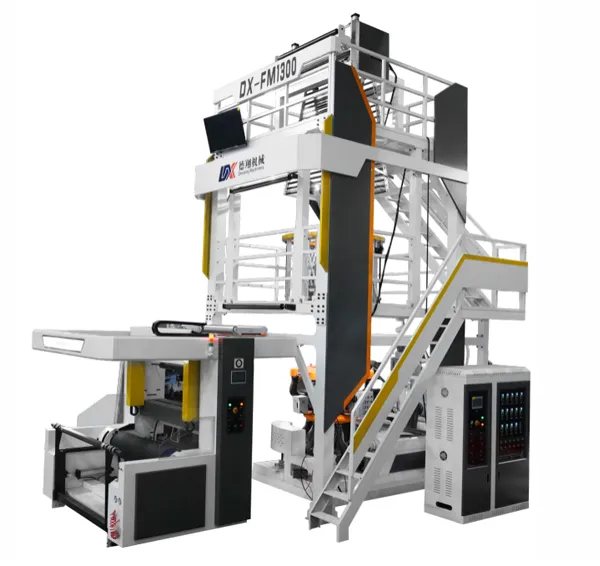
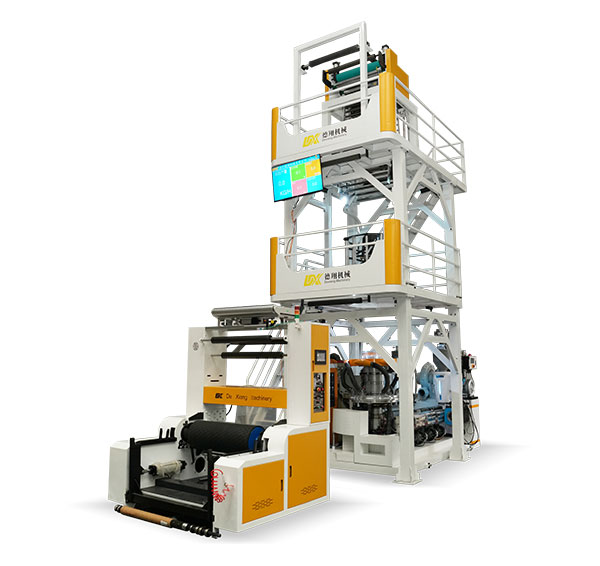
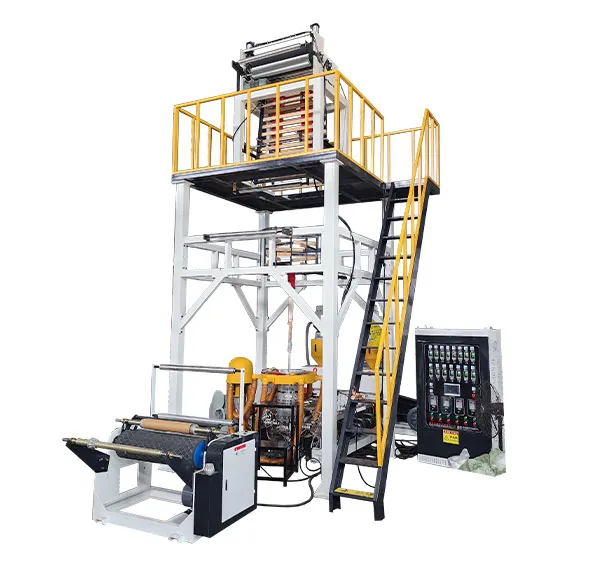
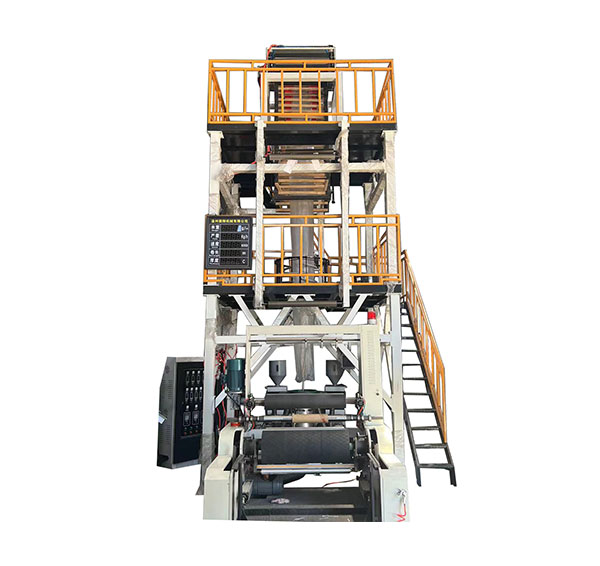
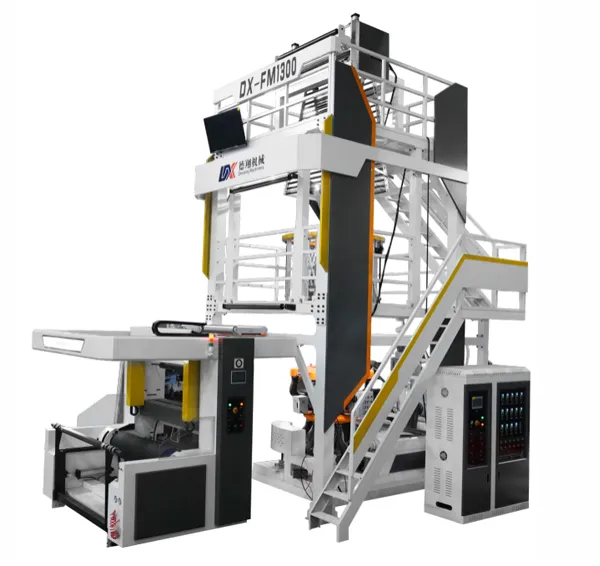
A blown film machine with ABA co-extrusion is that better way. Instead of a single extruder pushing one material through a die, ABA uses two extruders to produce a three-layer film. The outer A layers provide the surface properties you need — printability, sealability, appearance. The core B layer does the heavy lifting, using recycled material or calcium carbonate to reduce cost while adding strength. This guide covers what makes ABA co-extrusion different, how it delivers better film at lower cost, and what to look for when choosing an ABA line.
How two extruders make better film
The core advantage of ABA technology is combining two different materials in one film.
The A-B-A structure explained
ABA co-extrusion uses two extruders — typically with different diameters — to produce a three-layer film. The outer layers (A) are made from virgin resin, providing surface properties like printability, sealability, and gloss. The core layer (B) can contain recycled material, calcium carbonate, or lower-grade resin — materials that would compromise surface quality if used on the outside. The result is film that performs like virgin material at a fraction of the cost.
30-40% material cost savings
The ABA structure can save 30-40% on raw material costs compared to single-layer film production. By using recycled material or calcium carbonate in the core layer, manufacturers significantly reduce their reliance on expensive virgin resin. The outer layers remain pure, so the film's surface properties — printability, sealability, appearance — are unaffected.
Film strength that exceeds monolayer
ABA multi-layer blown film produces film that is stronger than monolayer alternatives. The three-layer structure distributes stress more evenly across the film, improving tear strength, puncture resistance, and load-bearing capacity. For packaging applications — liquid packaging, industrial bags, agricultural film — that strength translates directly to better product protection and fewer failures.
Materials and applications that fit the ABA approach
ABA film blowing machines process a wide range of polymers, making them suitable for diverse applications.
LDPE, HDPE, LLDPE — and more
ABA machines process low-density polyethylene (LDPE), high-density polyethylene (HDPE), linear low-density polyethylene (LLDPE), and metallocene polyethylene. That material flexibility means you can switch between resins without changing machines — responding to customer demands and market conditions.
From packaging to agricultural film
The films produced are widely used for liquid packaging, printed base materials, export and industrial products, agricultural covering film, and textile packaging. For converters serving diverse markets, an ABA line covers the range.
Film thickness from 10 to 200 microns
ABA lines produce films with thicknesses from 10 to 200 microns. That range covers everything from lightweight packaging films to heavy-duty agricultural mulch and industrial bags.
Features that make ABA lines reliable
High-speed ABA blown film machines incorporate design features that deliver consistent quality at production speeds.
Multi-layer co-extrusion stabilization technology
Multi-layer co-extrusion stabilization technology ensures stable performance across a wide range of materials. This technology maintains consistent film quality even when switching between different resin types or running high-speed production.
High-speed operation and energy efficiency
High-speed ABA lines operate efficiently while maintaining film quality. Energy-efficient designs reduce operating costs over the life of the equipment, improving the overall economics of film production.
Customizable configurations for different production needs
ABA blown film machines are available in various configurations — from compact lines for smaller operations to high-output systems for large-scale production. The ability to customize the configuration ensures the machine matches your specific production requirements.
Questions film manufacturers ask
Q: What's the difference between ABA and monolayer film?
A: Monolayer film uses a single extruder and one material. ABA film uses two extruders to produce a three-layer film — A-B-A — with the core layer (B) containing lower-cost materials like recycled resin or calcium carbonate. The result is film that is stronger than monolayer at a lower material cost.
Q: How much can I save on material costs with ABA technology?
A: The ABA structure can save 30-40% on raw material costs compared to single-layer film production by allowing recycled material or calcium carbonate in the core layer while keeping the outer surfaces pure.
Q: What materials can an ABA blown film machine process?
A: ABA machines process LDPE, HDPE, LLDPE, and metallocene polyethylene. They produce films from 10 to 200 microns thick, suitable for applications from liquid packaging to agricultural mulch.
Getting the right ABA line for your production
Choosing the right ABA blown film machine starts with understanding your production requirements. Consider your target materials — LDPE, HDPE, LLDPE, or metallocene. Evaluate your film thickness range — from thin packaging films to heavy-duty agricultural and industrial films. Consider your output requirements — from lower-volume specialty runs to high-speed continuous production.
An ABA line with two extruders — typically of different sizes — produces the three-layer structure that delivers strength and cost efficiency. Multi-layer co-extrusion stabilization technology ensures consistent quality across a wide range of materials. High-speed operation with energy-efficient designs improves overall production economics.
For film manufacturers, the ABA configuration isn't just an upgrade — it's a proven path to better margins and stronger products.
Ready to reduce material costs with an ABA blown film machine? Contact a supplier for a quote or product consultation. Share your target materials, film thickness, and output requirements — their team can recommend the right ABA configuration for your specific application.