English
 Español
You‘ve had the same line running for years. It still makes bags—just not as fast as it used to, and the reject pile keeps growing. Eventually, every production manager asks the same question: is it time to upgrade?
A bag making machine isn’t a purchase you make every year. These are long-term investments, and most operators expect a decade or more of service from a well-maintained unit. But there comes a point where patching things up costs more—in time, materials, and missed opportunities—than replacing the whole system.
The decision isn‘t always clear-cut. A new machine means capital expenditure, retraining, and downtime during installation. Keeping the old one means living with its limitations. The right choice depends on your production volumes, product mix, and how much downtime you can afford.
This guide walks you through the key indicators that suggest an upgrade is worth considering. We’ll look at performance metrics, maintenance patterns, new product demands, and the features that modern equipment brings to the table. By the end, you‘ll have a clearer picture of where your current line stands—and whether it’s time to start shopping.
The Output Is Slowing Down
Speed is the first thing you notice. That line that used to run at 160 bags per minute is now struggling to hit 120.
Some slowdown is normal as components wear. But when you‘ve replaced blades, adjusted tension, and fine-tuned the heating elements—and the speed still isn’t there—you‘re looking at a systemic issue. The machine’s core systems (servo motors, PLC controls, pneumatic feeders) lose precision over time.
The math is simple: slower output means fewer bags per shift, which means higher unit costs. If your competitors are running newer lines at higher speeds, you‘re losing margin on every order.
Beyond raw speed, consider consistency. Are your seal strengths varying from one run to the next? Is the zipper placement drifting? Modern machines use dual servo motor systems and computer-synchronized cutting to maintain precise control. If your current setup requires constant manual tweaking, that’s a sign the control systems are aging out.
Maintenance Is Eating Your Budget
Every machine needs maintenance. But there‘s routine upkeep, and then there’s a machine that never stops asking for attention.
Standard practice includes regular inspection, proper lubrication of moving parts, and timely replacement of wear-prone components like blades and seals. The red flag is when these tasks escalate into weekly breakdowns, unplanned downtime, and emergency parts orders.
-
Parts availability becomes an issue with older models. If you‘re waiting days for a replacement servo or relay, your production schedule suffers.
-
Labor costs climb when your maintenance team spends more time fixing than your operators spend running.
-
Downtime is the hidden killer. A few hours lost each week adds up to weeks of lost production over a year.
The machine’s pneumatic components, relays, and motors have finite lifespans. When they start failing in sequence, you‘re not repairing a machine—you’re managing a slow-motion breakdown. At that point, the cost of a new machine starts looking like a bargain.
Your Product Line Has Changed
Maybe you started with basic vest bags. Now your customers want zipper pouches, stand-up bags, or biodegradable options.
A bag making machine is designed for specific bag types and materials. If your current line can‘t handle the new stuff, you’ve got a problem.
Specialized equipment is required for producing plastic packaging bags with zippers. Retrofitting an old vest bag machine to make zipper bags is technically possible, but the results are rarely satisfactory. Seal quality suffers, speed drops, and rejection rates climb.
Material compatibility matters too. Modern machines handle a wider range of films—polyethylene (PE), polypropylene (PP), composite materials, BOPP, CPP, POF, and heat shrink films. If your current line is limited to one or two material types, you‘re turning away business.
Ask yourself: are you saying “no” to orders because your equipment can’t do the job? If the answer is yes, that‘s upgrade territory.
Energy Costs Are Through the Roof
Energy consumption isn’t the first thing most people think about when evaluating a bag making machine. But it should be.
Newer plastic bag machines offer significant energy savings compared to conventional equipment. That‘s not a trivial number. If you’re running multiple shifts, even a modest percentage saving hits your bottom line every single month.
Older machines waste energy in several ways:
-
Less efficient motors draw more power for the same output
-
Heating elements lose efficiency over time
-
Pneumatic systems develop leaks that force compressors to work harder
-
Control systems aren‘t optimized for energy management
The savings compound. A machine that uses less power also generates less heat, which means lower cooling costs in your facility. Over a five-year period, those savings can offset a significant portion of the purchase price.
If your utility bills have been creeping up even as production volumes stay flat, energy inefficiency is likely the culprit.
What a New Machine Actually Gives You
Upgrading isn’t just about fixing problems—it‘s about gaining capabilities.
Modern bag making lines come with features that were optional (or nonexistent) a decade ago:
-
PLC-controlled platforms with dual servo motors for precise, consistent output
-
Automatic photoelectric tracking to keep film aligned and reduce waste
-
Pneumatic feeding with magnetic powder brakes for stable film tension
-
Buffer devices that smooth out the feeding process
-
Fusing machines in the unwinding section that save time during roll changes
-
Computer-synchronized cutting that eliminates guesswork
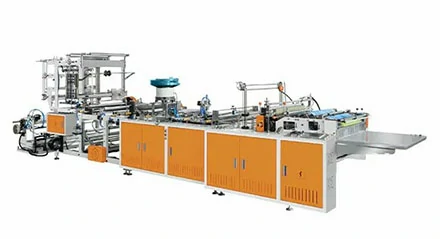
Here‘s a quick comparison of what you gain:
| Aspect | Aging Machine | Modern Equivalent |
|---|---|---|
| Control | Manual adjustments, drift over time | PLC + dual servo, consistent precision |
| Feeding | Tension fluctuations, film waste | Pneumatic + magnetic brakes, stable feed |
| Roll Changes | Line stops, lost production time | Fusing machine, continuous operation |
| Energy Use | Higher consumption | Significant savings |
| Material Range | Limited | PE, PP, BOPP, CPP, POF, composites |
| Bag Types | Basic styles | Stand-up, zipper, envelope, vest |
The productivity gains are measurable. Operators spend less time troubleshooting and more time producing. Reject rates drop. Changeover times shorten. And you can say “yes” to orders that your old machine couldn‘t handle.
When Should You Pull the Trigger?
How do I know if my machine is underperforming or just old?
Track your output per shift over a month. If you’re consistently below the machine‘s rated speed by more than 10-15%, and maintenance hasn’t fixed it, you‘re looking at age-related decline. Compare your reject rate now to what it was two years ago. If it’s climbed significantly, the machine‘s precision is slipping.
What about retrofitting instead of replacing?
Retrofitting can extend a machine’s life if the core structure is sound. You can upgrade control systems, replace motors, or add new feeding mechanisms. But retrofitting has limits. If the frame is worn, if multiple systems are failing, or if you need capabilities the machine wasn‘t designed for (like zipper attachment), replacement is usually more cost-effective in the long run.
How long does a typical bag making machine last?
With proper maintenance—regular cleaning, lubrication, and timely replacement of wear parts—a well-built machine can run for 10 to 15 years or more. The key is knowing when maintenance stops being preventative and starts being reactive. Once you’re fixing things that broke rather than preventing failures, the clock is ticking.
What to Look for in a Modern Replacement
If you‘ve recognized a few of the signs above, you’re probably wondering what‘s out there.
Today’s bag making equipment is built around automated control systems and quality management. Modern machines are designed for long-term durability and high-efficiency performance, with applications across food, daily necessities, medicine, and cosmetics industries.
A well-designed zipper bag line handles a broad range of materials and bag types—from stand-up pouches to envelope bags to vest bags. Energy savings compared to conventional machines can be substantial, which is worth noting if you‘re running high-volume shifts.
What sets a quality machine apart isn’t any single feature—it‘s the integration. The PLC and dual servo control system works in sync with pneumatic feeding, buffer devices, and computer-controlled cutting to deliver consistent output with minimal operator intervention.
When you’re evaluating an upgrade, look at the whole picture: speed, material flexibility, energy consumption, maintenance requirements, and the range of bag types you can produce. The leading manufacturers cover most common production scenarios, and their machines are built to run reliably for years.
One company that fits this description is DEXIANG Machinery, which manufactures bag making equipment with a focus on automated control and precision engineering. Their zipper bag line reflects that approach—designed for stability, with components selected for long-term reliability rather than just initial cost savings.
The best way to know if it‘s time? Run the numbers. Compare your current operating costs—maintenance, energy, downtime, rejects—against the projected costs of a new machine. Factor in the new revenue you could generate from bag types you can’t currently make. If the math works, it‘s time to upgrade.
Thinking about an upgrade? Reach out to DEXIANG’s team with your current production specs and bag requirements—they can help you model the costs and benefits of moving to a newer line.