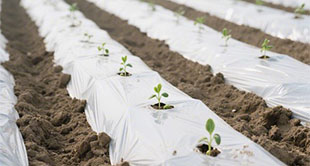
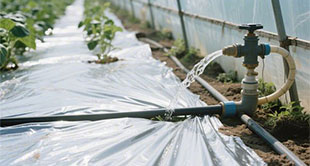
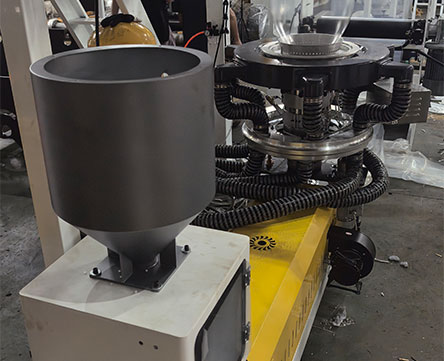
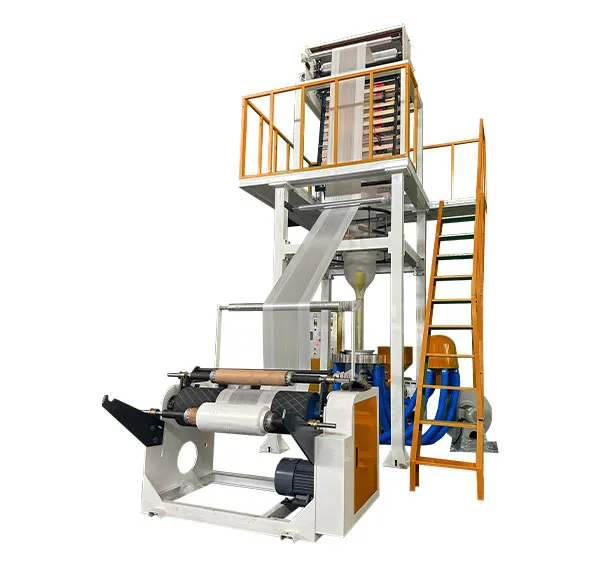
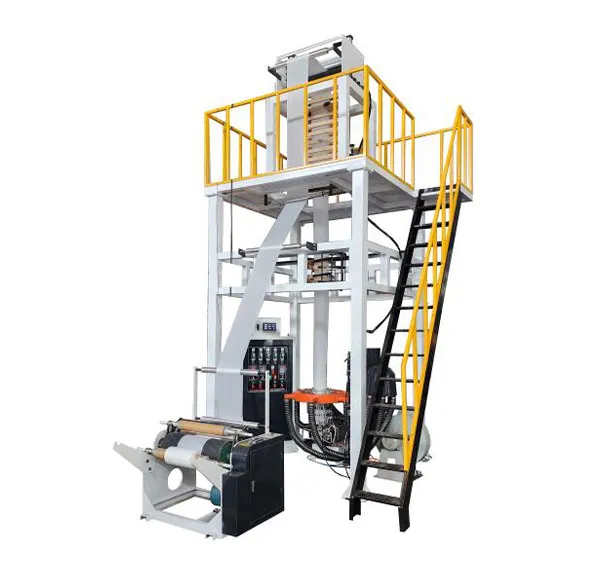
Agricultural Mulch Blown Film Machine
-
Screw L/D
30:1 -
Screw diameter
Φ65 -
Max output
90kg/h -
Screw speed
10~100r/min
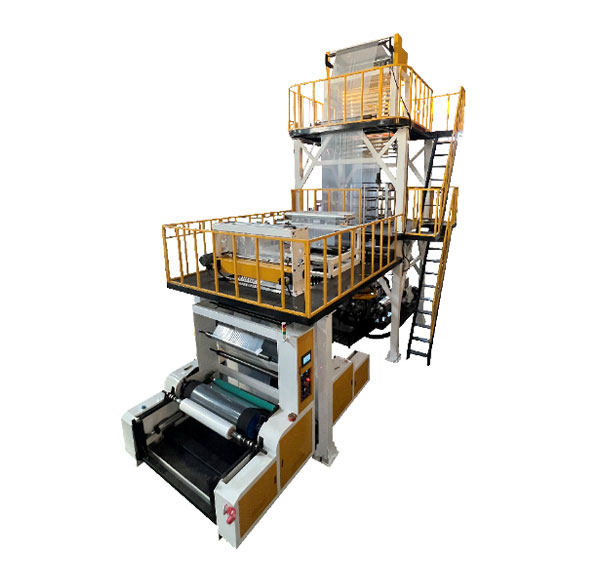
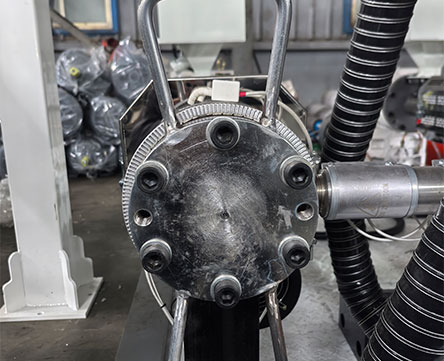
The screw is mostly made of Wear-resisting alloy steel, which is wear-resistant, corrosion-resistant, and has a long service life.
Recycled material production: Direct film blowing of first-grade/second-grade recycled pellets, with a cost only 50-80% of that of new materials.
|
Model |
DX-1300A |
|
Screw diameter |
65 |
|
Screw L/D |
30:1 |
|
Gearbox |
173 |
|
Main motor |
22 |
|
Output kg/h |
90kg |
|
Die head/mm |
2.2HDφ120 LDφ250 |
|
Blower /kw |
2.2 |
|
Up-Traction motor |
1.5kw |
|
Total power |
52kw (Average power consumption about 60%) |
|
Machine size |
6000×3200×5200 |
|
Screw speed |
10~100r/min |
|
Temperature control |
4 zones |
|
Cylinder cooling |
330w×1 |
Note: Because of technical improvements, machinery appearance , technical parameters may be changed without notice.


How to choose Single-Screw and Double-Screw Film Blowing Machines
First, align with material & application: Single-screw suits single raw materials (e.g., pure PE) for basic packaging (shopping bags) due to simple structure; double-screw fits mixed/modified materials (filled, blended resins) for functional films (barrier/heat-resistant) via better mixing.
Second, check key parts: Single-screw needs proper L/D ratio (25:1-30:1) for melting; double-screw requires suitable meshing type (tight/loose) for uniform dispersion.
Third, assess performance: Match output to capacity; verify film thickness consistency (single-screw) and material homogeneity (double-screw).
Finally, pick suppliers with timely after-sales to reduce downtime.
How to choose AB Film Blowing Machine and ABA Film Blowing Machine
First, define application scenarios: AB (double-layer co-extrusion) suits basic composite needs (e.g., general packaging with mild barrier) via two different materials; ABA (A=outer layers, B=inner layer) optimizes cost/strength for ordinary uses (e.g., shopping bags) with same outer materials.
Second, check core components: Select wear-resistant screws (e.g., 38CrMoAl) and high-precision dies to ensure stable extrusion and uniform film.
Third, evaluate performance: Match output to production demand; verify film thickness consistency, tensile strength, and transparency—key for quality.
Finally, confirm after-sales & efficiency: Choose suppliers with timely technical support; prioritize energy-saving models to cut long-term costs.
How to choose ABA film blowing machine and ABC film blowing machine?
To choose between ABA and ABC film blowing machines, focus on 4 core factors:
Material Needs: Pick ABA if you only use 2 raw materials (e.g., blending virgin & recycled PE, with recycled material in the middle layer to cut costs). Choose ABC for 3 distinct materials (e.g., adding a barrier layer like EVOH for moisture/oxygen resistance).
Product Function: ABA suits general films (shopping bags, protective films) with basic strength/transparency. ABC is for specialized films (food packaging, medical films) needing enhanced performance (barrier, puncture resistance).
Cost & Complexity: ABA has lower equipment/raw material costs and simpler maintenance. ABC costs more (3 extruders vs. 2 for ABA) and requires more operational expertise.
Production Flexibility: ABA is ideal for large-volume standard films; ABC fits custom, high-value films.
Align your choice with your target film’s function, material types, budget, and production scale.
How can the cooling system of a blown film machine be adjusted?
The cooling system can be adjusted by controlling the air speed and temperature of the air ring. Proper cooling ensures the quality of the film and prevents shrinkage or deformation of the film after molding.
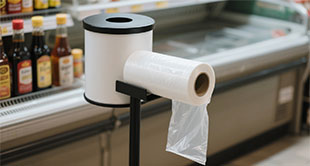
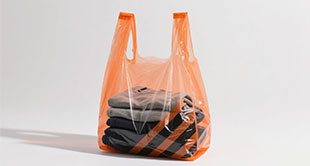
Blown film machines can produce different types of plastic bags such as shopping bags, garbage bags, food bags, courier bags, shrink bags, etc., which are suitable for the packaging needs of various industries.
How to choose the right blown film machine?
When selecting a blown film machine, you need to consider factors such as material type, film thickness, output requirements, accuracy of the control system, and the stability and energy efficiency of the machine.
How do I adjust the film thickness of a blown film machine?
Film thickness can be controlled by adjusting the extruder temperature, the position of the wind ring, and the haul-off speed. Film thickness uniformity can also be optimized by adjusting the airflow and cooling system of the blown film machine.
How can I improve the productivity of my blown film machine?
Efficiency can be improved by using high efficiency motors, optimizing temperature control systems, using high quality raw materials, and regular machine maintenance to ensure smooth operation.