English
 Español
You’re running a blown film line, and demand is growing. The obvious solution is to add a second extruder—more space, more energy, more labor. But what if there‘s a smarter way?
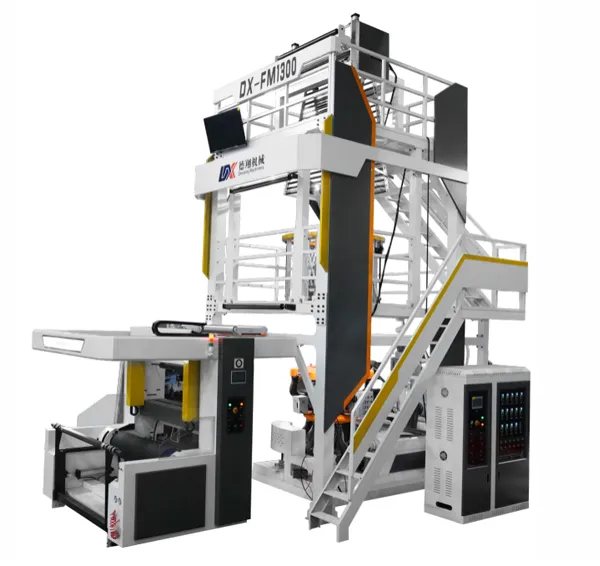
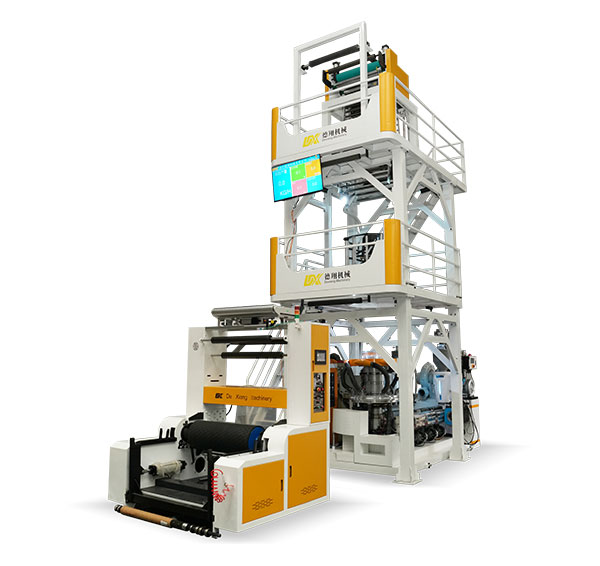
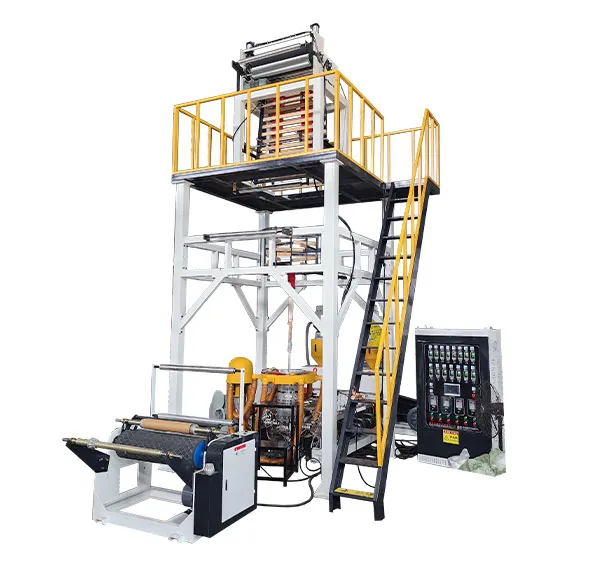
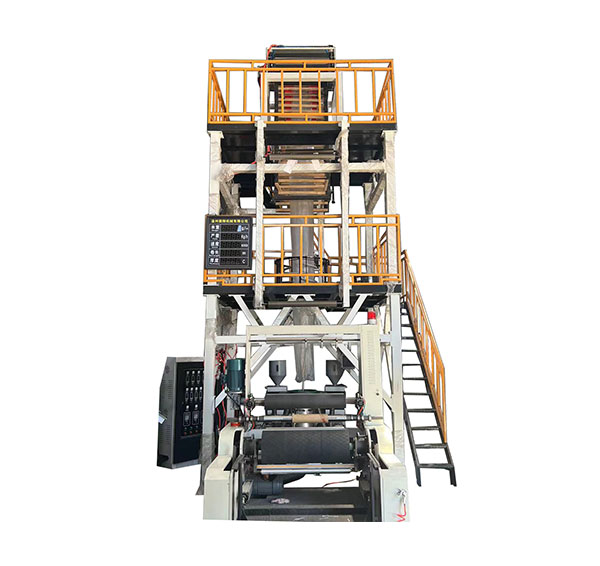
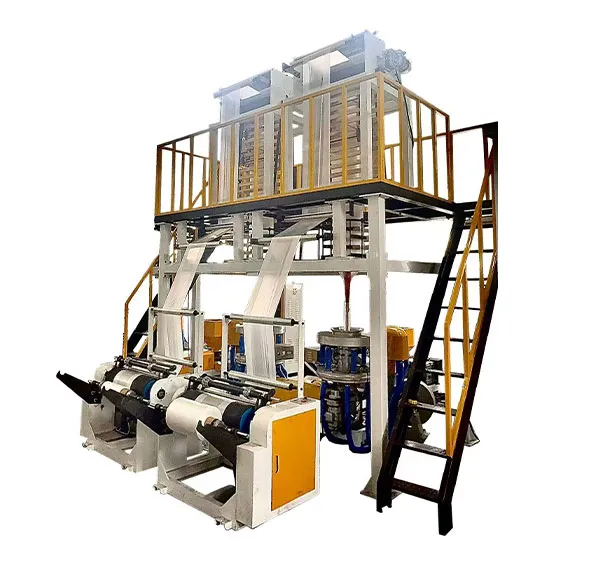
A Single Screw Dual Die Head Blown Film Machine uses a single extruder to feed two die heads simultaneously, producing two separate film tubes in one pass. The single-screw system is renowned for its reliability and efficiency, while the dual die heads enhance productivity and streamline the manufacturing process. For converters who need higher output without the overhead of a second machine, the dual-die design offers a compelling alternative.
This guide helps you assess whether a dual-die blown film machine is the right fit for your production line—covering how it works, the key advantages, and what to consider before buying.
One Extruder, Two Die Heads
The dual-die design is the heart of this machine‘s efficiency—and understanding it is the first step to deciding if it fits your operation.
Single Screw Feeds Two Heads
Unlike traditional setups that require a separate extruder for each die head, the dual-die machine uses a single screw and barrel to deliver molten polymer to two die heads. This means one extrusion system powers two film production lines simultaneously. The result is a significant reduction in equipment costs, floor space, and maintenance overhead. The single screw double die-head blown film machine uses high-quality steel for the die-heads, delivering better film quality and longer machine life.
Two Film Tubes in One Pass
Each die head produces a separate film tube. The machine can produce two film rolls at the same time, each with its own width and thickness specifications. For products like shopping bags, fruit and vegetable bags, and garment packaging, this dual-output capability means you can run two different film specifications simultaneously—or double the output of a single specification.
Materials It Handles
The machine is suitable for a wide range of polyethylene materials, including low-density polyethylene (LDPE), high-density polyethylene (HDPE), and linear low-density polyethylene (LLDPE). These materials are commonly used for food packaging, garment bags, textiles, and industrial products.
What You Actually Gain
The dual-die design offers benefits that go beyond just doubling output—benefits that directly impact your operating costs and production flexibility.
Energy Savings That Cut Costs
Running two die heads from a single extruder consumes significantly less energy than running two separate extruders. One motor, one heating system, one cooling system—all serving two production lines. Energy consumption can be reduced by up to 20% compared with operating two separate machines. Over a year of operation, the savings can be substantial. By operating the motor at a reduced frequency and employing advanced heating technology, energy savings of 30-70% are achievable over traditional resistance heating.
Floor Space That Saves Money
Two separate blown film lines take up twice the floor space. The dual-die machine consolidates two production lines into a single footprint. For film converters with limited production space—or those paying premium rent—this is a major advantage.
Labor That Stays Lean
One machine requires one operator—even if it produces twice the output. By doubling production without doubling labor, the dual-die design improves labor efficiency and reduces per-unit labor costs.
Built to Last
The screw and barrel are made from 38CrMoAlA high-quality alloy steel, hardened and nitrided for high hardness, corrosion resistance, and long service life. The die heads feature hard-chrome plating and a spiral-mandrel structure, delivering uniform melt flow and consistent film quality.
Three Questions to Ask Yourself
Not every production line needs a dual-die machine. Here’s a framework to help you decide.
Signs You Should Consider One
-
You‘re consistently running at capacity and turning away orders due to limited output.
-
You have limited floor space and can’t add a second extruder line.
-
You run multiple film types or widths and want the flexibility of two simultaneous outputs.
-
You want to reduce energy costs without sacrificing production volume.
-
You’re producing high volumes of HDPE/LDPE/LLDPE film for packaging applications.
Signs You Might Not Need One
-
Your production volume is low or seasonal—the capacity may be underutilized.
-
You frequently change between very different materials—setup time for two die heads may offset the efficiency gain.
-
You have ample floor space and capital—two separate lines might offer more redundancy.
-
You primarily run specialty or small-batch films—a single-die machine may be more flexible for frequent changeovers.
The Bottom Line
The dual-die blown film machine is most effective for medium to high-volume producers running consistent materials. If you need to scale production without scaling costs, it’s worth serious consideration.
| Factor | Dual-Die Machine | Two Separate Lines |
|---|---|---|
| Output | Double (one extruder, two dies) | Double (two extruders) |
| Energy Cost | Lower (up to 20% less) | Higher |
| Floor Space | One footprint | Two footprints |
| Labor | One operator | Two operators |
| Equipment Cost | Lower (one extruder) | Higher (two extruders) |
| Flexibility | High (two simultaneous outputs) | Higher (independent lines) |
| Maintenance | One system to maintain | Two systems |
Questions You‘re Asking
What’s the difference between a dual-die machine and running two separate extruders?
A dual-die machine uses one extruder to feed two die heads. Two separate extruders require two motors, two heating systems, two cooling systems, and typically two operators. The dual-die machine uses one motor and one operator for the same output, saving energy, space, and labor.
What materials can the machine process?
The machine is suitable for LDPE, HDPE, and LLDPE. These materials are used for food packaging, garment bags, agricultural film, and industrial packaging. The machine is versatile enough to produce a wide range of films—from thin fruit bags to thicker shopping bags.
What is the typical film width range?
Film width depends on the model. Common configurations produce film widths from 100mm to 400mm per die, with two dies producing up to 800mm total width across two rolls. Film thickness typically ranges from 0.006mm to 0.10mm. For larger requirements, custom configurations are available based on order.
How durable is the screw and barrel?
The screw and barrel are made from 38CrMoAlA alloy steel, hardened and nitrided for high hardness and corrosion resistance, ensuring long service life. The die heads feature hard-chrome plating and a spiral-mandrel structure for uniform melt flow.
Why DEXIANG Machinery
For converters looking to scale production without scaling costs, the dual-die blown film machine offers a proven solution.
DEXIANG Machinery is a professional manufacturer of plastic packaging machinery with over 100 employees, including 20 senior engineering technicians, advanced processing equipment, and comprehensive testing methods. The company’s main products include complete sets of equipment for flat bags, T-shirt bags, express bags, garbage bags, and two to five-layer film blowing lines.
DEXIANG’s single screw dual die head blown film machine is designed for high-output film production. The dual-die design allows one extruder to power two die heads, producing two separate film tubes simultaneously. The machine handles LDPE, HDPE, and LLDPE for a wide range of packaging applications.
With durable 38CrMoAlA alloy steel screws and barrels, the machine is built for long-term reliability in demanding production environments. For converters who need to increase output without adding a second extruder, the dual-die blown film machine delivers the efficiency and productivity that growing operations require.
Ready to explore whether a dual-die blown film machine fits your production line? Reach out to DEXIANG Machinery’s team—they can provide model specifications, custom configuration options, and production recommendations based on your specific film requirements.