English
 Español
Let‘s cut straight to the chase: if your production runs primarily involve straightforward materials like LDPE, LLDPE, or HDPE for general-purpose packaging or agricultural mulch films, a single-screw configuration typically offers the better return on investment. Conversely, if you‘re working with complex formulations, high filler loads, or require superior barrier properties, the enhanced mixing capabilities of a twin-screw design justify its higher upfront cost.
The Energy Bill Doesn’t Lie
Here‘s something that keeps production managers up at night: extrusion equipment typically consumes 60 to 70 percent of total energy used in plastic film manufacturing, with energy expenses accounting for nearly 40 percent of production costs. Those numbers have only become more painful as power prices climb globally.
Single-screw configurations generally come out ahead on energy efficiency. One comparative case study found that a single-screw extruder with a barrier screw design operating at 15-20 rpm reduced energy consumption by approximately 30 percent compared to a twin-screw counterpart processing similar materials. The reason is straightforward: fewer moving parts, less friction, simpler thermal dynamics.
But don‘t assume that means twin-screw setups are inherently wasteful. Modern machines designed with energy efficiency in mind consume roughly 30 to 50 percent less power than pre-2015 equipment. Features like variable frequency drives (VFDs) reduce motor power consumption by 25 to 35 percent compared to fixed-speed motors. The gap is narrowing as technology improves, but the fundamental physics still favor single-screw for straightforward applications.
When One Screw Isn‘t Enough
I remember visiting a facility in Vietnam that specialized in high-barrier food packaging films. They started with a single-screw line, assuming the lower purchase price was the smart play. Within eight months, they had replaced the entire extruder with a twin-screw system. The problem wasn’t throughput—it was consistency. Their additive dispersion was uneven, creating weak spots that failed during quality testing.
This is where twin-screw extruders earn their keep. The intermeshing design forces material through intense distributive and dispersive mixing zones, breaking up agglomerates and distributing functional additives—UV stabilizers, antiblock agents, processing aids—with remarkable uniformity. For applications requiring nano-level additive dispersion or multi-layer co-extrusion with complex polymer blends, the single-screw simply cannot compete.
Some of the most advanced formulations I‘ve seen run on twin-screw systems include:
-
Barrier films with EVOH tie layers
-
Biodegradable polymer blends requiring precise thermal management
-
High-gloss cosmetic packaging with demanding optical requirements
-
Recycled content films where contaminant consistency varies batch to batch
The typical rule of thumb: if your formulation contains more than 5 percent fillers or functional masterbatches, or if your processing window spans less than 20°C, a twin-screw configuration should be on your shortlist.
The Hidden Costs No One Talks About
Initial equipment price is the easiest number to compare. Single-screw systems are generally cheaper to purchase, simpler to operate, and require less technical expertise for routine maintenance. A general-purpose packaging film producer might never need anything more sophisticated.
But here‘s where the analysis gets messy. Single-screw designs have lower output ceilings. The limited conveying and mixing capacity restricts maximum production speed compared to twin-screw alternatives. For small-scale operations or applications with modest volume requirements, that’s fine. For a 24/7 production environment chasing every kilogram of throughput, those limitations translate directly into forgone revenue.
Maintenance costs follow a similar pattern. Single-screw systems have fewer wearing components and simpler geometries. A well-trained operator can handle most routine service tasks. Twin-screw configurations demand more specialized knowledge. The screw elements themselves—kneading blocks, conveying elements, mixing sections—require careful tracking of wear patterns and scheduled replacement intervals. Some facilities maintain dedicated engineering staff just for screw optimization.
That said, the complexity cuts both ways. Twin-screw systems offer extraordinary modularity. You can reconfigure the screw profile to handle different material families, adjust shear intensity for heat-sensitive polymers, or add degassing sections for moisture-laden recycled feedstocks. A single-screw machine is what it is.
Making Sense of Material Compatibility
I‘ve seen more misapplications than I care to count, usually stemming from one mistake: assuming that if a machine runs LDPE well, it‘ll handle everything else. This is dangerously wrong.
LDPE screws optimized for low-viscosity resins require significantly more torque and power when processing LLDPE—enough that many standard extruder drives simply cannot keep up. Conversely, a screw designed for high-crystallinity polymers will overheat shear-sensitive materials like PVC.
The safe guideline: for stable, single-component resins with wide processing windows—think LDPE, standard LLDPE, general-purpose HDPE—a single-screw extruder with a properly designed barrier section delivers excellent results at the lowest total cost. For heat-sensitive, highly filled, or modified materials that require precise thermal control and aggressive mixing, twin-screw technology is the appropriate choice.
Beyond the Screw: The System That Actually Matters
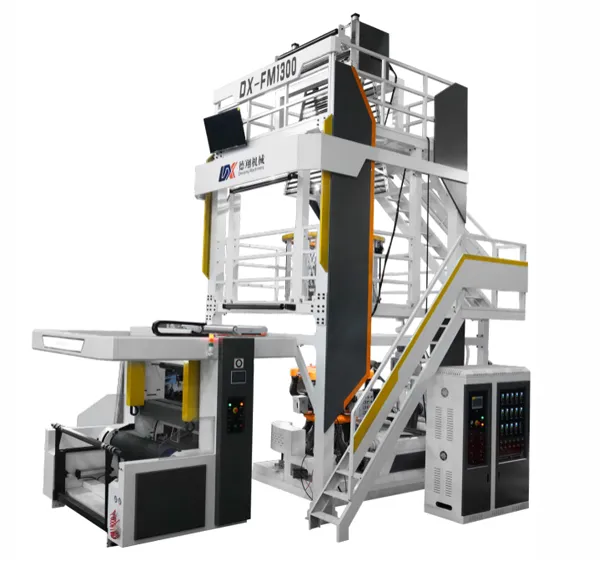
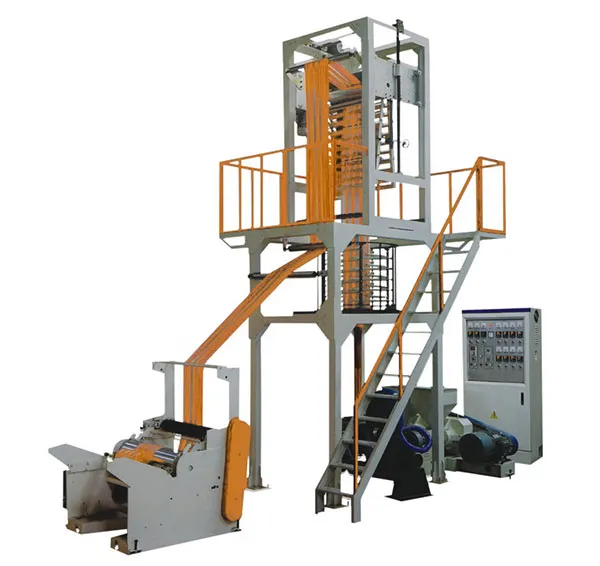
Here‘s something I wish someone had told me earlier: obsessing over screw count distracts from the bigger picture. The die design, cooling system efficiency, winding tension control, and overall line integration often determine your real-world output quality more than whether you have one screw or two.
A poorly designed die will ruin the output of the most sophisticated twin-screw extruder. Inadequate bubble cooling creates gauge variation that no amount of upstream mixing can fix. Inconsistent winding tension turns perfect film into unusable rolls.
I’ve seen facilities achieve exceptional results with well-engineered single-screw lines running complex co-extrusions—not because the extruder was magical, but because the die, air ring, and downstream equipment were perfectly matched to the application. Conversely, I‘ve watched premium twin-screw lines underperform because of mismatched cooling or sloppy web handling.
When Customization Becomes Critical
Standard configurations work for standard applications. But once you move beyond commodity films—into highly technical packaging, specialty agricultural films, or medical-grade products—off-the-shelf solutions start showing their limits.
This is where customized system engineering becomes not just helpful but essential. A supplier willing to adjust screw geometry, barrel length-to-diameter ratios, die gap tolerances, and cooling profiles for your specific material and output requirements will deliver results that no catalog product can match.
Some of the most successful blown film operations I‘ve visited share one characteristic: they treated their extrusion line as an integrated system, not a collection of parts. They worked closely with equipment suppliers to optimize every stage—from hopper loading to winding—for their unique production environment. They didn’t just buy machines; they engineered production solutions.
The Verdict: Match the Machine to the Mission
Let me give you a framework that actually works, based on conversations with plant managers who‘ve made this decision successfully.
Choose single-screw when:
-
You process standard polyolefins (LDPE, LLDPE, HDPE, PP) with minimal additives
-
Your application is general-purpose packaging, agricultural mulch films, or commodity bags
-
You operate with limited technical staff and need straightforward maintenance
-
Energy cost is a primary concern
-
Production volumes are moderate
Choose twin-screw when:
-
Your formulations contain significant fillers, recycled content, or functional additives
-
You need superior barrier properties or optical characteristics
-
You process heat-sensitive or narrow-window polymers (PET, PLA, certain engineering resins)
-
Your operation has technical expertise available for screw optimization and maintenance
-
High throughput and premium product quality justify the investment
Most facilities I work with end up running both—single-screw lines for their commodity volume, twin-screw systems for specialty products that command premium pricing. That hybrid approach often delivers the best of both worlds.
Getting the Details Right
If you‘re evaluating equipment right now, spend at least as much time on the peripherals as the extruder itself. The cooling system‘s efficiency, the air ring design, the die geometry, the winding tension controls—these determine your actual output quality and consistency.
I’d also strongly recommend running your actual material through any system before committing. Supplier demonstration facilities using virgin resin with ideal conditions tell you very little about how the line will perform with your recycled blend, your specific additive package, your real-world operating conditions.
The right answer exists—but it depends entirely on what you‘re making, what you’re making it from, and what quality standards you need to hit. There‘s no universal winner in the single versus twin debate. There‘s only the right tool for your specific job.