English
 Español
If you’re a packaging manufacturer, agricultural material processor or flexible goods producer looking to grasp the full operational logic behind industrial film manufacturing, understanding the complete working flow of a blown film machine helps you cut production costs, stabilize film quality and match raw material formulas more reasonably. Many factory owners struggle with uneven film thickness, low output efficiency and frequent equipment malfunctions simply because they lack clear insight into how this industrial forming equipment converts plastic particles into continuous roll film. From raw material melting to final winding, every mechanical and thermal step decides the finished product’s performance, and mastering these details is critical for long-term workshop operation optimization.
The Core Principle Behind Industrial Film Forming
Before diving into step-by-step operation, it’s vital to recognize the basic physical and mechanical logic that drives plastic film blowing process. All thin flexible plastic films used in daily packaging, farm mulch and industrial wrapping rely on continuous extrusion, inflation, cooling and shaping. Raw resin materials, mostly HDPE, LDPE or biodegradable plastic particles, undergo heating and plasticization inside sealed screw cylinders, turning solid particles into uniform molten fluid under constant temperature and pressure.
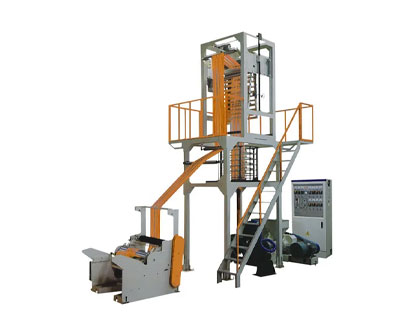
Unlike flat extrusion devices that produce sheet materials in single direction stretching, this type of production gear adopts vertical bubble inflation design. The molten material is extruded upward through an annular die head, forming a hollow tubular film bubble. Fresh ambient air is injected inside the bubble to support expansion, while external cooling fans lower surface temperature rapidly to lock the film’s thickness and toughness.
For small and mid-sized factories pursuing balanced cost and output, grasping this core principle also makes formula adjustment easier. Mixing masterbatch additives, recycled materials and new resin in proper proportions will not damage equipment stability, as long as the heating curve matches the mechanical bearing range.
Step-by-Step Operational Workflow for Film Production
1. Raw Material Feeding and Plasticization
The whole process starts with automatic feeding systems that transport plastic particles into the screw barrel. High-precision heating sections distributed along the barrel raise temperature gradually, avoiding local overheating that causes material decomposition. Differentiated screw structures, specially optimized for different resin types, ensure slow, even shearing to prevent molten material density deviation. gravimetric dosing systems assist in precise mixing of auxiliary materials, controlling mixing accuracy within 0.1% to keep finished film color and texture consistent batch by batch.
2. Die Head Extrusion and Bubble Formation
After full plasticization, the molten plastic is pushed steadily to the rotary die head. The annular outlet shapes the fluid into a seamless tube, and built-in rotating structures reduce thickness deviation around the tube wall. Internal compressed air fills the tubular material to form a stable air bubble, and bubble size is adjustable based on target film width and thickness requirements. This link is where most low-end equipment fails; unstable air pressure leads to bubble shaking and uneven film edges.
3. Air Cooling, Traction and Folding
Surrounding cooling air rings deliver circulating cold air to solidify the hot bubble surface quickly. As the film rises steadily, traction rollers control lifting speed to balance vertical stretching force. After cooling and shaping, guide plates fold the tubular film into flat double-layer sheets, preparing for subsequent winding and cutting. Advanced units adopt aluminum alloy bubble guide frames to reduce friction and avoid surface scratches on soft film materials.
More enterprises now prioritize workshop environment comfort, and optimized cooling and transmission structures effectively lower operating noise below 75 decibels, far better than traditional outdated models.
Key Components That Decide Finished Film Quality
No matter single-layer or multi-layer co-extrusion models, several core parts directly determine product qualification rate and long-term operation stability. Wear-resistant alloy steel screws and high-precision die heads are non-negotiable foundations, as they resist corrosion and long-term high-temperature abrasion. Automatic tension control systems adjust winding tightness in real time, solving loose rolling or over-tensioned cracking issues common in basic equipment.
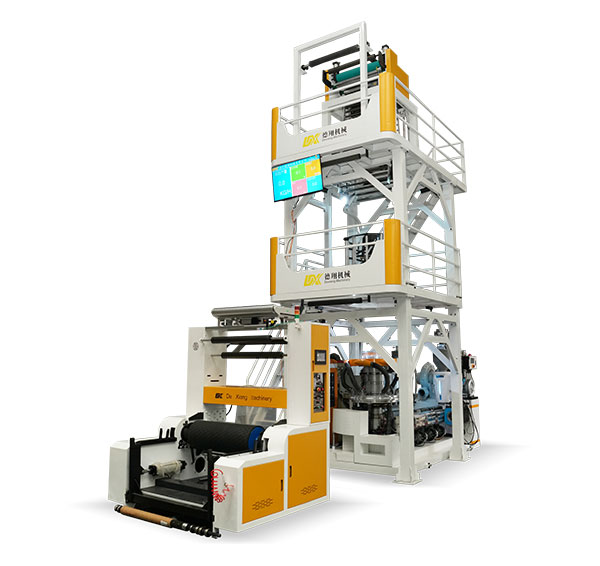
multi-layer co-extrusion frames are another pivotal upgrade for modern production lines. ABA and AB type structural designs allow different raw materials to be compounded in one molding process. The outer layer uses high-purity resin for smooth surface and anti-aging performance, while the middle layer adopts cost-effective recycled materials to control overall production expenses. This layered composite design has become a mainstream choice for cost-sensitive packaging manufacturers in recent years, verified by industry data from the European Plastics Processing Association showing that multi-layer composite film production can cut raw material costs by 18% to 30% annually.
Other practical accessories include automatic screen changers for uninterrupted filter replacement, corona treatment devices to enhance film surface adhesion for printing, and rotary winding units to improve rolling uniformity. Reasonable component collocation turns basic film forming equipment into a multifunctional production platform adaptable to diversified order demands.
Equipment Type Comparison: Find Suitable Production Solutions
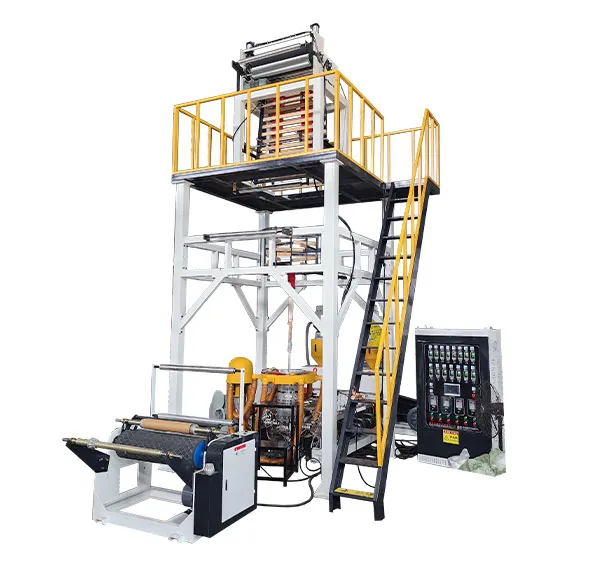
When sourcing film manufacturing equipment, buyers often confuse single-layer units, co-extrusion devices and biodegradable special models, failing to match equipment with actual production demands. Traditional single-screw single-layer machines feature low initial investment and simple operation, ideal for small workshops producing ordinary shopping bags and daily packaging films. Yet their limitations are obvious: single material formula, poor film comprehensive performance and low anti-pressure durability.
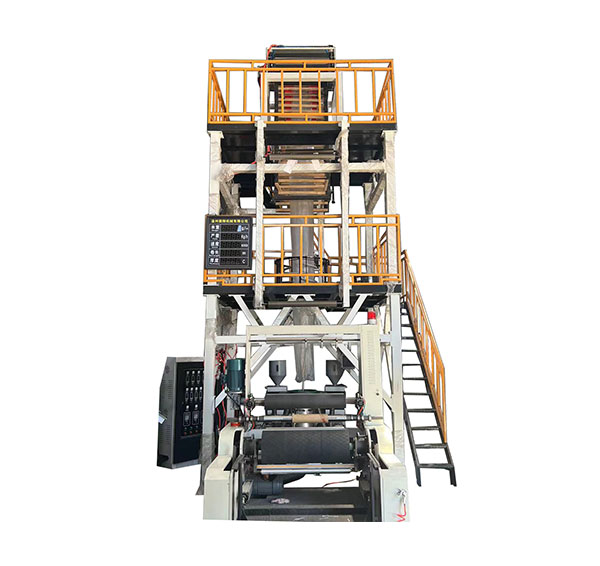
Multi-layer co-extrusion production units break through these limitations through composite molding. By stacking materials with different properties, finished films gain better waterproofing, tensile strength and anti-ultraviolet performance, perfectly fitting agricultural mulch production demands and food flexible packaging scenarios. Biodegradable customized models, specially modified for degradable resin characteristics, adjust heating parameters and screw propulsion speed to avoid material degradation during processing.
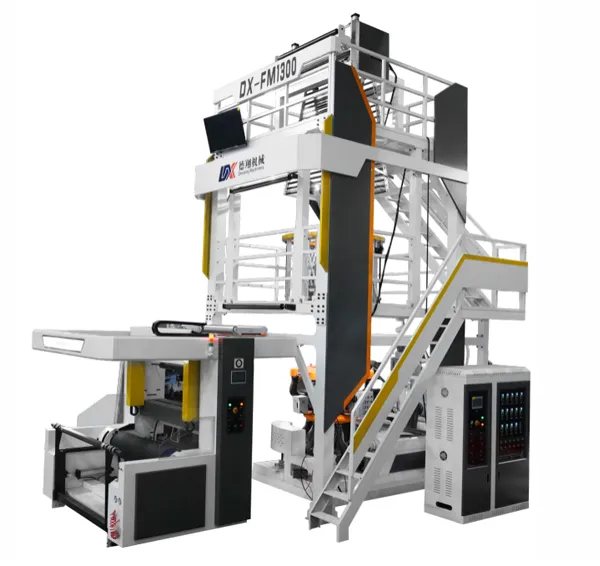
In this diversified equipment landscape, a professional blown film machine stands out as a balanced and reliable solution for mid-to-large-scale manufacturers. Compared with generic low-cost equipment from small factories, Dexiang’s independently optimized mechanical structure solves common pain points such as severe vibration, oil pollution and frequent manual bubble correction. Its fully automatic tension adjustment and intelligent thickness correction system greatly reduce manual intervention, while modular component design shortens maintenance time and lowers long-term operating costs.
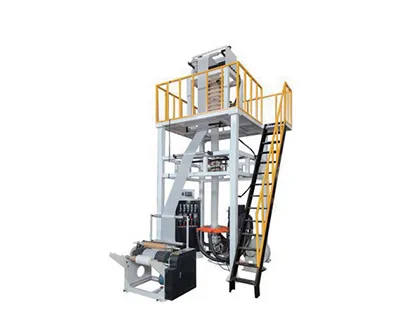
Buyers with customized demands, such as special width film, color film or high-temperature resistant packaging materials, can obtain personalized selection advice, and the technical team will tailor equipment parameters and optional parts according to production volume, raw material types and finished product standards.
Customized Service and Long-Term Operation Advantages for Factories
Beyond basic working performance, personalized customization capability has become a key factor for B2B buyers to measure equipment value. Different regional production environments, order types and industrial standards require targeted equipment adjustments. Dexiang supports personalized modifications including motor brand selection, automatic roll changing systems, gravimetric feeding upgrades and dust-proof structural optimization, fully adapting to complex workshop conditions across different countries and regions.
For long-term operation, the value of standardized industrial design cannot be ignored. High-precision centralized processing for all mold parts ensures component compatibility, making spare parts replacement convenient and avoiding production shutdown delays caused by accessory mismatch. The overall energy-saving optimization design reduces power consumption per kilogram of film, bringing steady cost savings for mass production throughout the equipment service life.
Many overlooked details also affect daily use experience: humanized operation panels with simplified parameter setting logic, closed transmission structures to reduce dust accumulation, and low-friction operating parts to extend service cycles. These human-oriented design details accumulate into higher production efficiency and lower comprehensive operating costs, creating tangible economic benefits for processing enterprises.
Ending
To sum up, the entire film blowing production process integrates thermal dynamics, mechanical transmission and automatic control technology. Every link from raw material processing to finished product winding affects final quality and output. Whether you plan to upgrade old equipment, expand production lines or enter the flexible film manufacturing industry, clarifying the working mechanism and equipment differences helps you make more rational purchasing decisions. With customized support, stable performance and cost-saving design, targeted industrial film making solutions can fully meet diverse modern production needs.