English
 Español
A bag converter in Vietnam had a problem: a single‑layer line produced consistent film, but the cost of virgin resin was rising every quarter. Switching to a two‑extruder AB line allowed the operator to put high‑grade PE (HDPE, LDPE or LLDPE) in the A layer for surface gloss, strength and sealing, while the B layer accepted post‑industrial or post‑consumer recycled material, or a calcium‑carbonate masterbatch. The bubble was stable, the tensile strength stayed high, and the cost per kilogram dropped by 15%. That is the economic logic behind a dual‑extruder AB blown film machine.
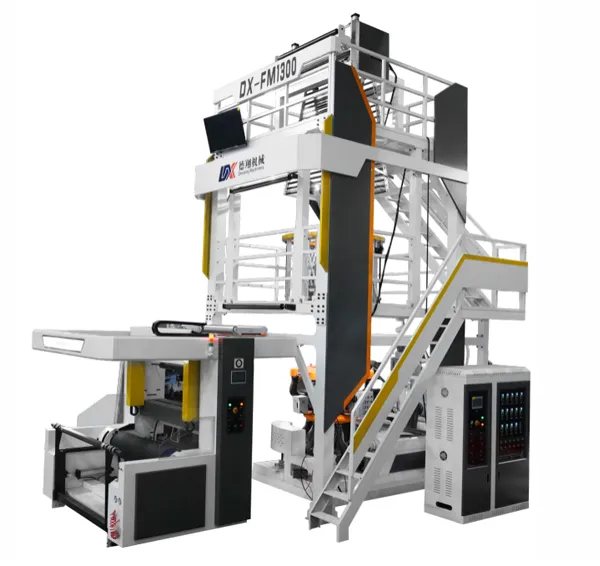
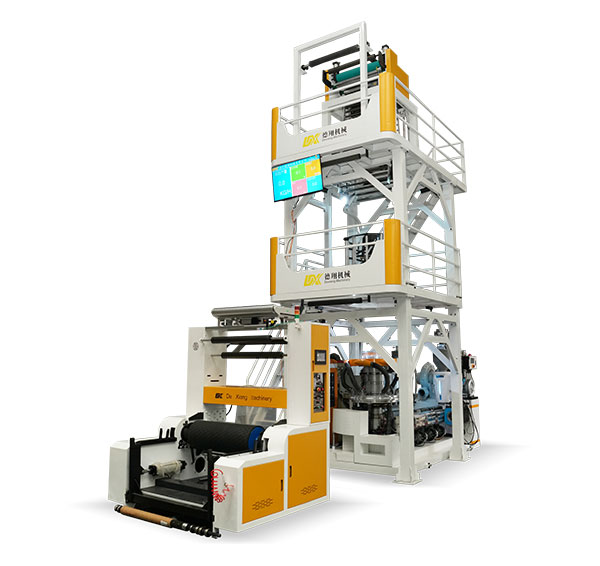
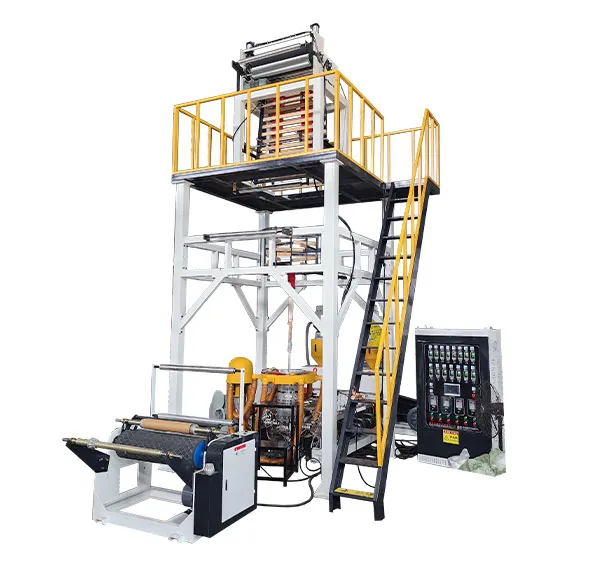
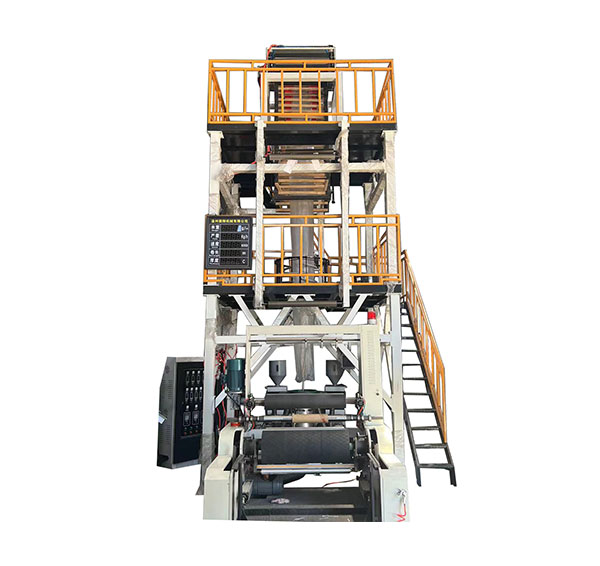
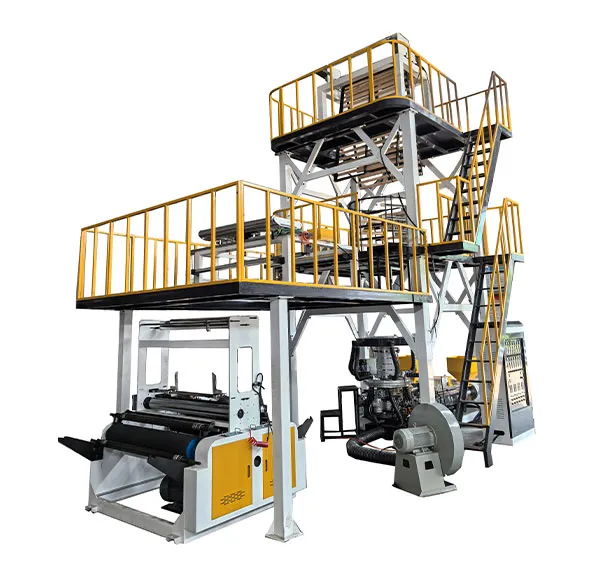
The AB High Speed Film Blowing Machine from Dexiang is a double‑screw, two‑layer co‑extrusion line that processes HDPE, LDPE and LLDPE. The A extruder (Ø60mm, 30:1 L/D) feeds the surface layer, while the B extruder (Ø65mm, 32:1 L/D) feeds the inner/cost‑saving layer. Both melt streams combine in a double‑layer die head and exit as a single bubble. This article explains why AB co‑extrusion cuts material cost without sacrificing surface quality, how the 120‑150 kg/h output compares to single‑screw lines in a 7×24 shift, where the 0.008‑0.10mm thickness range fits different bag applications, and what the 800‑1500mm width capability means for a flexible packaging plant.
AB co‑extrusion: why two extruders give you surface quality and cost control at the same time
A blown film machine with only one screw must use the same material for the entire film thickness. If you need high‑clarity surface, you pay for high‑clarity resin through the whole layer. If you want to add recycled content, the recycled particles appear at the surface, degrading printability and seal strength.
The AB two‑layer process splits the melt into two independent streams that merge just before the die. The A extruder feeds a thin, high‑quality skin (typically 20‑30% of total thickness). The B extruder feeds a thicker core (70‑80% of total thickness) that can be filled with cheaper material. For a 50‑micron shopping bag with a 15‑micron A layer, the converter saves roughly 50% of resin cost per kilogram compared to an all‑virgin bag.
| Parameter | A Extruder (Surface) | B Extruder (Core) |
|---|---|---|
| Screw diameter | Ø60mm | Ø65mm |
| L/D ratio | 30:1 | 32:1 |
| Material | Virgin HDPE/LDPE/LLDPE | Recycled / CaCO₃ / blended |
| Thickness share | 20‑30% | 70‑80% |
| Function | Gloss, printability, seal | Bulk, stiffness, low cost |
The co‑extrusion die head maintains a sharp boundary between the two layers so the recycled content does not migrate into the surface. An optical microscope cross‑section of the film reveals two distinct layers. The bubble remains stable because the melt temperatures are matched within 5°C.
The role of screw L/D ratio in melt quality
The B extruder has a longer 32:1 L/D ratio compared to the A extruder’s 30:1 because recycled resin often contains contaminants and a broader molecular weight distribution. The extra two diameters of mixing length allow more time for the screw to homogenise the melt before it enters the die. A short screw would leave unmelted gel particles that could puncture the bubble. The B screw also uses a compression zone designed for shear‑sensitive recycled granules, preventing degradation.
Output and width: why 120‑150 kg/h and 800‑1500mm cover most packaging needs
The blown film machine is rated for a maximum output of 120‑150 kg/h depending on material and film thickness. Running LDPE at 50 microns, the line reaches 140‑150 kg/h. Running HDPE at 25 microns, output drops to 110‑120 kg/h. The change comes from the higher viscosity of HDPE and the need for faster bubble cooling.
Film width ranges from 800mm to 1500mm (lay‑flat). A standard order for 1000mm wide film fits the machine comfortably. The die head diameter is matched to the target width; a 1500mm lay‑flat requires a die head of approximately 400‑500mm. The air ring and internal bubble cooling (IBC) are sized to the die diameter.
For a bag converter running 8‑hour shifts, 120 kg/h at 80% uptime yields 768 kg of film per shift. At 0.25 kg per 1000 shopping bags, that is roughly 3 million bags per shift — enough for a medium‑sized bag plant.
Thickness range 0.008‑0.10mm: from ultra‑thin produce bags to heavy industrial liners
The AB line produces film from 0.008mm (8 microns) to 0.10mm (100 microns) . The low end of the range is used for produce bags, garment covers, and lightweight shipping envelopes. The high end is for heavy‑duty sacks, shrink film, and agricultural mulch.
Thin film (under 20 microns) runs fastest because the bubble cools quickly. Thick film (over 70 microns) requires slower speed to avoid frost line instability. The screw speed and haul‑off are adjusted through the PLC. The operator can store thickness profiles for repeat orders.
A blown film machine that can span 8‑100 microns gives a converter flexibility to serve multiple markets with one line: grocery bags (15‑25 microns), heavy‑duty sacks (50‑80 microns), and shrink wrap (30‑50 microns) all run on the same AB extruder set with different die gap and cooling settings.
Twin screws and 7×24 operation: why the dual extruders are sized differently
The A extruder (Ø60mm) runs at a lower speed because it only needs to supply 20‑30% of the mass. The B extruder (Ø65mm) runs at higher speed to supply the core layer. The 32:1 L/D ratio on the B extruder gives extra mixing length for homogenising recycled resin with variable melt flow.
The blown film machine is rated for continuous 7×24 operation. The gearbox is oil‑cooled, and the bearings are rated for 50,000 hours. The screw and barrel are made of high‑grade nitrided steel, wear‑resistant for processing CaCO₃‑filled compounds. Maintenance intervals for screw pull‑out are every 8,000‑10,000 operating hours, roughly once per year on a two‑shift schedule.
The twin‑screw line typically achieves 20‑30% higher output than a single‑screw line of the same screw diameter because the co‑extrusion die head reduces pressure drop and the film cooling is more efficient when the web exits the die at a more uniform temperature.
Why continuous operation demands heavy‑duty bearings
The B extruder’s thrust bearing is sized for the higher back‑pressure generated by pushing recycled melt through the die gap. A standard bearing would fail after 6‑8 months of 7×24 service. The AB machine uses an extra‑heavy‑duty roller bearing with a load rating of 60kN, and the housing is cooled by circulating oil. The predicted L10 life exceeds 50,000 hours, which matches the overhaul schedule of the screw barrel.
How the AB high speed film blowing machine fits into a bag converter’s extruder line‑up
DX Machinery (Dexiang Machinery) has manufactured blown film extrusion lines for the packaging industry. The AB high speed film blowing machine is a dual‑extruder co‑extrusion line designed for converters who need to reduce resin cost by using recycled or filled materials in the core layer while maintaining a virgin‑quality surface. The main technical parameters are:
-
Film thickness: 0.008‑0.10mm
-
Lay‑flat width: 800‑1500mm
-
Max output: 120‑150 kg/h
-
Screw diameters: A: Ø60mm (30:1 L/D), B: Ø65mm (32:1 L/D)
-
Die head: Combined double‑layer die, diameter matched to width
-
Haul‑off height: Typically 6‑8 meters
-
Winding: Automatic surface winder with tension control
The line includes a Siemens PLC, touch screen, automatic die gap adjustment, internal bubble cooling (optional), and a single‑shaft or duplex winder. The extruder barrels are water‑cooled, and the air ring is double‑lip design for bubble stability.
An AB blown film machine that places recycled resin where it belongs — hidden under a thin surface layer of virgin polymer — cuts material cost by roughly 15% without sacrificing print quality or seal strength. For a bag converter processing 1,000 tons of film per year, that saving represents €150,000‑200,000 annually.
【Request a quote from DX Machinery】
Send DX your target film width (800‑1500mm), thickness (8‑100 microns), and preferred output (kg/h) for an AB high speed film blowing machine quotation with a two‑layer co‑extrusion recommendation.