English
 Español
A supermarket shopping bag rips at the bottom just as it leaves the checkout counter. A garbage bag splits during pickup, spilling contents across the driveway. A bulk produce bag fails to seal due to uneven thickness at the center.
These are not simply resin issues. They are extrusion limitations.
For packaging converters supplying the retail and waste management sectors, the difference between "standard film" and "reliable heavy-duty film" is invisible on the roll but unmistakable under load. And that reliability starts upstream—inside the extruder barrel and die head.
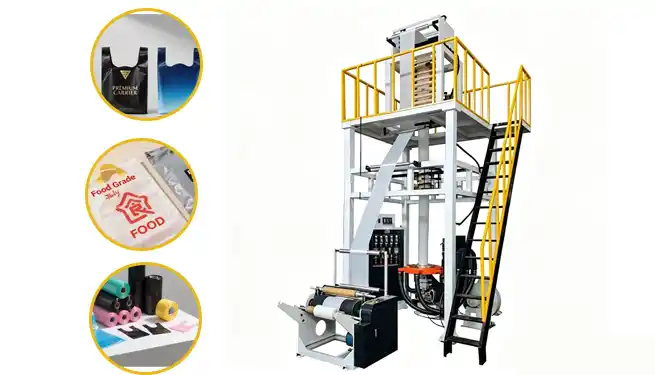
What Retailers Expect from a Film Line
Large-format bags—whether T-shirt bags for groceries, star-sealed trash liners, or drawstring refuse sacks—share three non-negotiable metrics: load capacity, volume consistency, and puncture resistance. A blown film line that delivers two out of three leads to customer complaints.
Consider a standard 30-liter shopping bag. The film must:
-
Withstand 8-10 kg of distributed weight (canned goods, bottles)
-
Maintain a consistent lay-flat width to fit boxed bag dispensers
-
Exhibit no thin spots that become tear propagation zones
According to industry standards for film testing (ASTM D882), achieving this requires thickness tolerance below ±5% across the entire web. Standard oscillating lines often drift beyond ±10%, creating the "weak link" effect in a bag batch.
The Mechanical Roots of High-Strength Film Quality
Let us examine three specific machine components that determine whether your output can handle the stress of heavy loads or large volumes.
1. The Screw Design: Achieving Melt Homogeneity for Gauge Control
Inconsistent melt results in inconsistent lay-flat. When producing high-volume garbage bags (e.g., 50+ liters) or high-weight shopping bags (10+ kg capacity), gauge variation is the enemy.
A conventional screw often struggles with high-load polyethylenes (HDPE or MDPE blends). If the melt is not perfectly homogeneous, the bubble oscillates. An oscillating bubble produces a bag where one side wall is 15 microns thick and the other is 25 microns. Under load, the 15-micron side fails every time.
A barrier screw with a mixing section solves this by ensuring uniform viscosity before the melt exits the die. This directly translates to uniform wall thickness, meaning every bag in the batch carries the rated weight.
2. Die Diameter & Lay-Flat Range
For shopping bags and trash can liners, the "lay-flat" width (the width of the flattened tube) dictates the bag's volume capacity.
A small die has to run at a very high blow-up ratio (BUR) to achieve a wide lay-flat. High BUR introduces orientation stress. A shopping bag made with high orientation stress will "neck down"—the top of the bag will be wide, but the bottom (where the weight sits) will be narrow and weak.
A die sized correctly for the target lay-flat (generally keeping BUR between 1.5:1 and 3:1) produces a balanced film. This ensures that a 40-liter trash bag actually holds 40 liters without bulging or bursting at the seams.
3. IBC with Ultrasonic Bubble Control for Volume Stability
Internal Bubble Cooling is standard, but control logic varies significantly.
Basic IBC uses fixed air flow. If the plant temperature changes by even 5°C, the bubble diameter drifts. A drifting diameter changes the bag's volume.
Advanced IBC uses ultrasonic sensors paired with proportional valves, adjusting air volume in real-time. For a stack of 1,000 shopping bags, consistent bubble diameter (±2mm) ensures the bags nest perfectly in a dispenser box. Inconsistent diameter causes "blocking" (bags sticking together) or jamming at the POS (Point of Sale) counter.
Common Configuration Mistakes in High-Volume Film Production
During technical audits, a recurring pattern emerges: many lines sold as "general purpose" lack critical components for high-strength or high-volume applications.
Mistake #1 – Ignoring the Haul-Off Height
For heavy-duty applications, the height of the cooling tower matters. If the frost line height is too short, the polymer chains do not have time to relax. "Frozen-in stress" makes the film stiff. A stiff trash bag rips easily when stretched; a stiff shopping bag crinkles loudly and refuses to stand open.
A tall tower (or variable height adjustment) allows the bubble to cool slowly, resulting in a tougher, more flexible film that can handle sudden impact loads—like a dropped jar inside a shopping bag.
Mistake #2 – Underpowered Winder Tension Control
Star-sealed garbage bags and die-cut shopping bags require precise winding tension. If the tension is too high, the rolls telescope. If too low, the rolls collapse.
Lines without automatic taper tension control cannot compensate for the increasing roll diameter. The result is "tightness variation" across the roll. The outer layers of the roll might be perfect, but the inner layers near the core are crushed flat—making them unusable on automatic bagging machines.
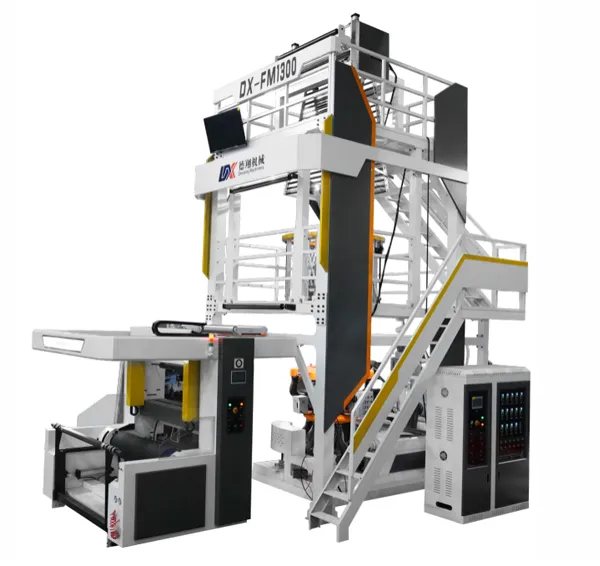
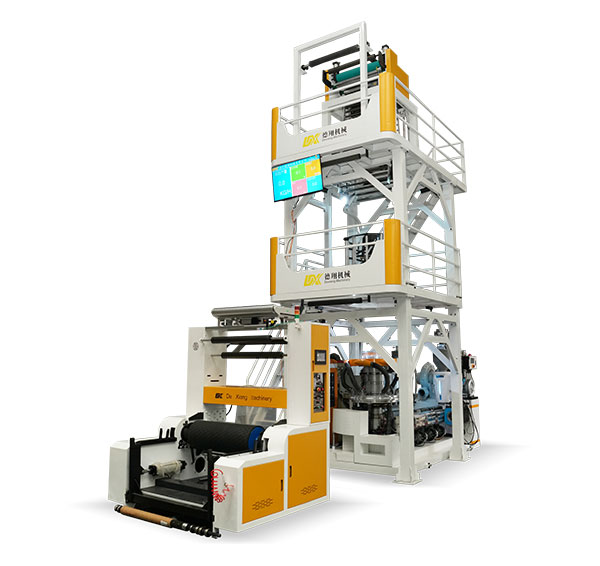
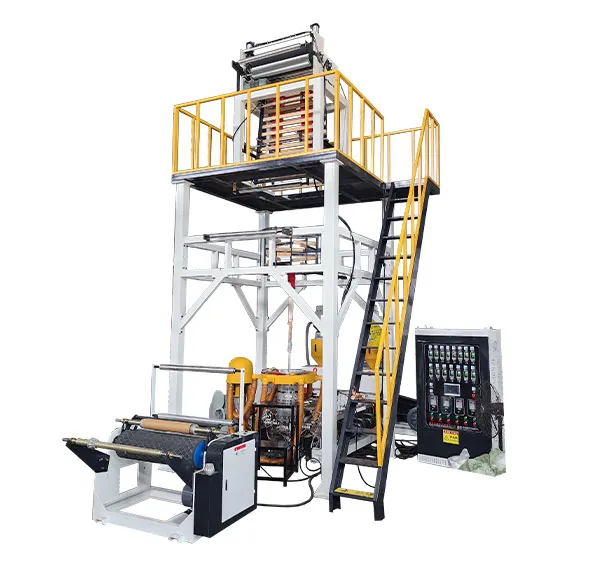
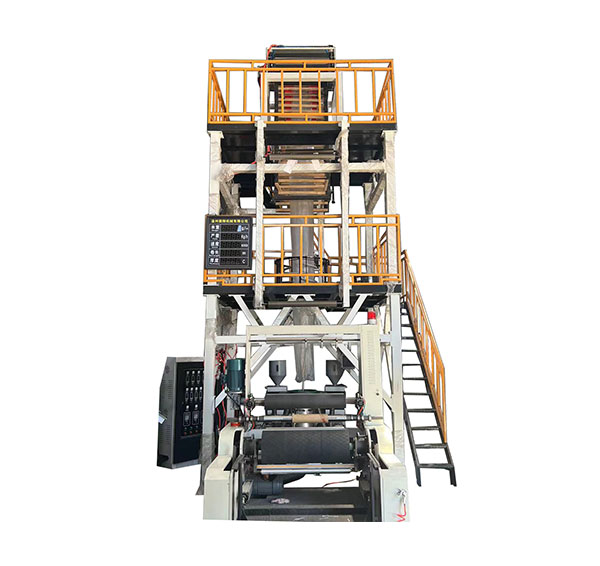
If you are currently evaluating production configurations for shopping bags or garbage bags, you can review this manufacturer's modular solutions for different load capacity requirements.
Material-Specific Requirements for Bag Applications
The type of bag dictates the machine hardware. A truly capable line accommodates these shifts.
| Application | Critical Requirement | Machine Feature Required |
|---|---|---|
| T-shirt Shopping Bag (HDPE) | High stiffness, low stretch | High-compression screw, IBC for quick freeze |
| Star-sealed Trash Bag (LDPE/LLDPE) | High impact strength, puncture resistance | Dual-lip air ring for slower freeze, tall tower |
| Drawstring Refuse Bag | Consistent thickness for string channel | Oscillating haul-off to eliminate TD variation |
| Heavy-duty Bulk Bag (20kg+ capacity) | Low gauge variation under high pressure | Closed-loop IBC with ultrasonic, wide die gap |
A line configured for HDPE shopping bags (thin, stiff, noisy) will struggle with LLDPE trash bags (thick, soft, stretchy) without significant screw and air ring adjustments. Dual-purpose lines require specialized mixing screws and adjustable die gaps.
Operational Best Practices for Bag Film Extrusion
Even with the right machinery, operational habits determine the strength of the finished bag:
Gauge Profiling – For a 20-micron shopping bag, a 2-micron variance (10%) is acceptable for low-grade, but high-strength requires 5% or less. Log thickness profiles every hour. If the gauge trends up at the edges ("dog bone" effect), the die bolts need recalibration.
Temperature for Toughness – Running HDPE too hot creates a brittle film. Running LLDPE too cool creates high motor amps and melt fracture (sharkskin). Follow the resin supplier's "melt temperature window" strictly. For blends (HDPE/LLDPE), the window narrows significantly.
Line Speed vs. Output – For heavy-duty garbage bags, line speed is secondary to cooling. If you push speed beyond the cooling capacity, the film will block (layers stick together) or shrink unevenly. A slower line producing usable film is infinitely more profitable than a fast line producing scrap.
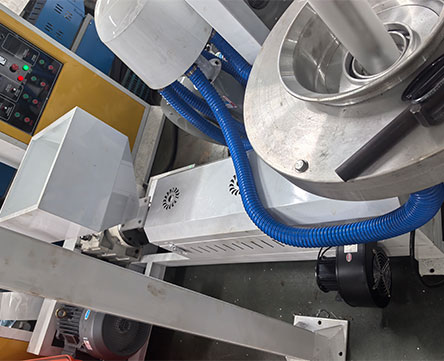
What to Specify When Purchasing a Bag-Making Line
Based on feedback from technical procurement managers at large-scale bag converters, here is a concise specification checklist for a blown film line targeting shopping or garbage bags:
-
Screw L/D ratio: 30:1 minimum (32:1 preferred for LLDPE blends)
-
Die diameter: Sized to target lay-flat with BUR 1.5-3.0 (avoid extreme BURs)
-
Gap settings: 1.0mm to 3.0mm range (wider for heavy-duty trash bags)
-
IBC: Closed-loop with ultrasonic feedback for volume consistency
-
Tower height: Minimum 8 meters for heavy-gauge films
-
Winder: Auto-taper tension with shaftless turret
Machines meeting these specifications typically cost 20-35% more than entry-level lines. However, the reduction in "bad bags per batch"—specifically under-filled or torn bags—pays back the difference rapidly for a two-shift operation.
The Economic Reality
Let us run a simple calculation for a line producing 200 kg/hour of shopping bags.
At 5% scrap (weight-based), you lose 10 kg/hour. Over 6,000 hours/year (two shifts), that is 60,000 kg of waste. At 1,200/tonresin,thatis1,200/tonresin,thatis72,000 lost annually—plus the cost of storing and recycling the scrap.
But the hidden cost is functional scrap: bags that meet weight but fail strength. A retailer returning a pallet of 500,000 shopping bags because 5% rip at the handles is a relationship-ending event.
A properly configured line—with barrier screw, closed-loop IBC, and oscillating haul-off—reduces functional scrap to under 1%. Beyond material savings, it secures the customer contract.
Moving Forward
If your current blown film line struggles with inconsistent bag volumes, handle tear-outs, or thickness variations on heavy-duty lines, the limitation is likely mechanical rather than operational.
The demand for reliable packaging continues to grow, particularly in e-commerce and retail. Consumers expect a plastic bag to hold their groceries without double-bagging. They expect a trash bag to cinch closed without tearing.
DEXIANG has documented case histories of converters who replaced general-purpose lines with configurations optimized for high-strength and high-volume applications. Their approach emphasizes the specific mechanical features discussed in this article: barrier screws, closed-loop IBC, and automated tension winding.
For a technical assessment of how these features apply to your target output (shopping bags, trash liners, or heavy-duty sacks), explore the engineering specifications for high-performance blown film lines here.