English
 Español
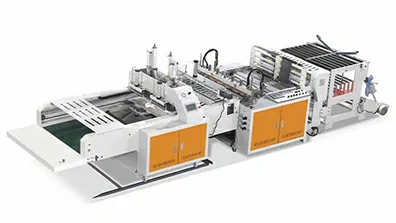
A roll of HDPE film feeds into the machine. It passes through guide rollers, under a photoelectric sensor that reads registration marks, and into a sealing station where heated bars melt the edges together to form the bag’s side seams. Then a cutting knife separates the bag from the film web. A punch mechanism cuts the handle opening — the characteristic “vest” shape. The finished bag drops onto a stacker, counted automatically. This cycle repeats 140 to 400 times every minute.
That sequence is the work of a bag making machine designed specifically for vest bags — also called T‑shirt bags, the kind with cut‑out handles found at supermarket checkout counters. The machine processes HDPE, LDPE, LLDPE, and biodegradable films. The operator sets the bag dimensions — width from 200‑400mm, length up to 650mm — on the PLC touch screen. The film thickness range is 0.015‑0.035mm. This article explains how the machine punches the vest handle without wasting film, why double‑lane output doubles production without doubling floor space, and where the photoelectric tracking system prevents misprinted bags when the registration mark goes missing.
Double‑lane vest bag machine: two lines from one roll
A single‑lane bag making machine produces one bag per cycle. A double‑lane bag making machine produces two bags per cycle. The film is slit in half lengthwise as it feeds through. One half becomes the left lane, the other the right lane. Two sets of sealing bars, cutting knives, and handle punches operate simultaneously, synchronized by the PLC controller.
For a vest bag manufacturer running 200 bags per minute per lane, a double‑lane machine outputs 400 bags per minute — 24,000 bags per hour. The machine also saves material. The center cut between lanes eliminates the need for edge trim on both sides of a wide single‑lane web. For a plant processing 1,000 tons of film per year, that edge trim reduction saves 3‑5% of material cost.
The double‑lane configuration also allows the machine to produce two different bag sizes simultaneously if the film is pre‑slit accordingly. The operator programs each lane independently on the touch screen.
| Parameter | Typical Range |
|---|---|
| Bag‑making width per lane | 200‑400 mm |
| Max bag‑making length | 650 mm |
| Bag thickness | 0.015‑0.035 mm |
| Production speed per lane | 140‑200 pcs/min |
| Double‑lane total output | 280‑400 pcs/min |
Data sourced from industry‑standard high‑speed vest bag machine specifications.
How the machine punches the vest handle without wasting film
The vest bag gets its name from the handle shape — two straps cut out of the top of the bag, leaving a shoulder opening. The punch mechanism cuts these handle openings precisely, removing the waste material in a single motion. The waste is pulled away by a vacuum system and collected for recycling.
The punching unit is pneumatically or hydraulically actuated. The die set is matched to the bag size; changing the die allows the machine to produce different handle shapes — rounded, angled, or straight. The punch timing is synchronized with the sealing and cutting cycle so the handle opening lands exactly in the correct position on every bag.
For a T‑shirt bag, the handle punch is critical. A misaligned punch will cut into the bag body, creating a hole that leaks groceries. The photoelectric tracking system ensures the punch aligns with the printed registration mark. When the operator changes bag size, the stored recipe sets the punch position automatically.
Sealing and cutting: why heat‑sealing first and cold‑cutting second produces a clean bag mouth
A vest bag that seals at the bottom but has a fused opening is difficult to open at the checkout counter. The cashier must rub the edges apart, slowing the line.
The machine uses heat sealing cold cutting technology. First, a heated sealing bar applies pressure to the overlapping film layers, melting the polyethylene coating to form the bottom and side seals. Then, a separate, unheated cutting knife severs the bag along the seal line. The knife is not heated, so it does not melt the cut edge. The bag opening remains crisp, and the cashier can open it with one hand.
The two‑step process also protects the knife. A hot blade softens with repeated heating and can warp after extended runs. The cold‑cut knife operates at room temperature, maintaining its edge geometry through thousands of cycles. For a plant running two shifts, the cold‑cut knife may last a year before replacement, while a hot blade would need replacement every 3‑4 months.
The sealing temperature is adjustable through the PLC. For thin 0.015mm HDPE, the operator sets a lower temperature to prevent burn‑through. For thicker 0.035mm LDPE, the temperature is increased to ensure a full melt.
Servo drive and photoelectric tracking: why the machine stops when the print mark is missing
Printed vest bags have registration marks — small dark squares printed on the film edge — that tell the machine where to cut, seal, and punch. If the film stretches or the printing cylinder slips, the registration mark shifts. A bag making machine without tracking will cut through the middle of the brand logo or punch the handle in the wrong place.
The machine integrates photoelectric tracking with double‑servo control. A photoelectric sensor reads the registration mark in real time. When the mark arrives earlier or later than expected, the PLC calculates the error and adjusts the bag pull length for the next cycle, shifting the cut position back into register.
If the sensor fails to detect a mark at the expected interval — because a film splice passes through, the ink density varies, or the film slips — the machine triggers an alarm and stops immediately. The operator corrects the film position and restarts. The scrap material wasted is limited to one or two bags. For a line running 200 bags per minute per lane, avoiding a 30‑second blind run of 100 misprinted bags can save 100 bags of material plus the sorting labor.
The double‑servo motor system controls both lanes independently. Each lane has its own servo motor for length positioning. The operator sets the bag length on the touch screen; the servo moves the film feed rollers to the exact position. The double‑servo design also allows the machine to adjust for film stretch automatically — a feature that single‑servo machines lack.
Automatic counting and stacker: how the machine knows when to stop
A bag making machine running at 200 bags per minute per lane produces 200‑400 bags per minute. At that rate, a stacker holding 500 bags fills in 1.5‑2.5 minutes. The operator cannot stand at the delivery end all shift.
The machine includes an automatic counting function with settable counting alarm. The operator programs the desired number of bags per stack on the touch screen (e.g., 500). When the count is reached, the machine sounds an alarm and stops automatically. The operator removes the stack and presses start. A separate total counter accumulates the total bags produced across all jobs for shift reporting.
The stacker uses a double‑platform system. A second stacker platform swings into place while the operator removes the finished stack from the primary platform. The machine does not stop for stack clearance. The operator changes empty core rolls and clears the stacker during runtime rather than during planned stops.
For a vest bag converter running two shifts, the automatic counting and double‑platform stacker save 30‑45 minutes of downtime per shift compared to a machine without these features. The automatic constant temperature controller keeps the sealing bars within ±2°C of the setpoint, eliminating the temperature drift that causes weak seals as the machine warms up.
How the high speed vest bag making machine fits into a supermarket bag production line
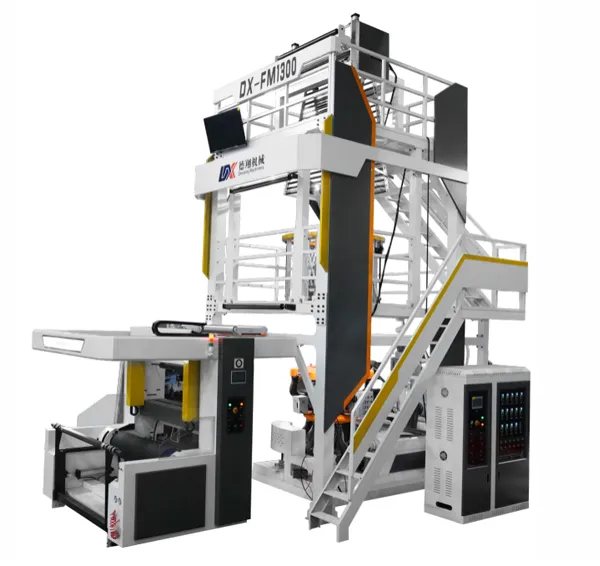
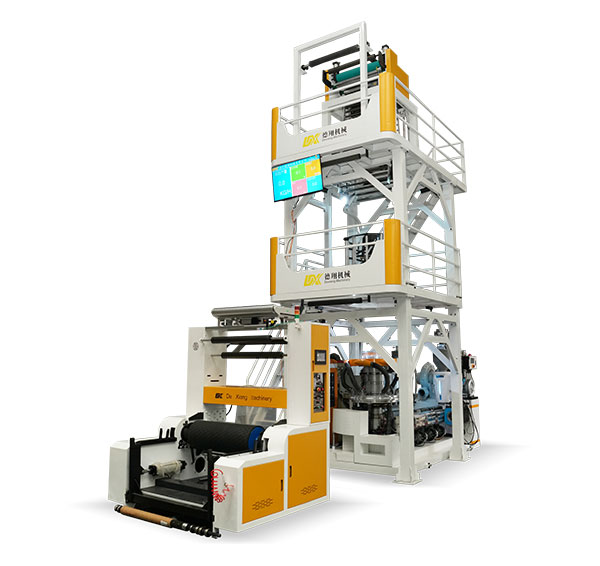
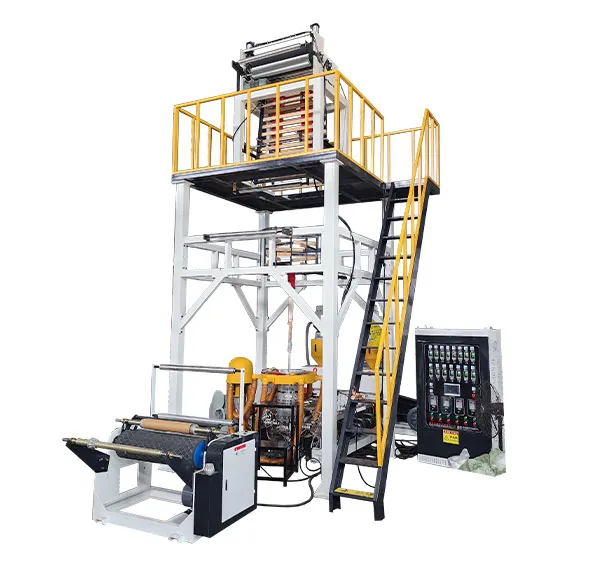
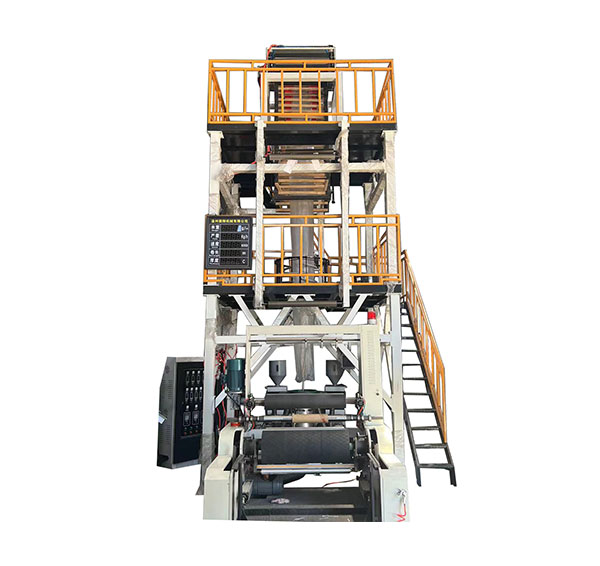
DX Machinery has manufactured bag making equipment for the retail packaging industry. The High Speed Vest Bag Making Machine is designed for converters producing supermarket T‑shirt bags, merchandise bags, and biodegradable carrier bags. The machine features double‑lane configuration, double‑servo motor control, photoelectric tracking with auto‑stop, heat sealing cold cutting technology, automatic handle punching, automatic counting with settable alarm, PLC touch screen control, and 16kW total power consumption. It processes HDPE, LDPE, LLDPE, and biodegradable films.
A bag making machine that seals and cuts at 200 bags per minute per lane, punches vest handles automatically, tracks printed registration marks without stopping, and stacks finished bundles while the operator walks away keeps a packaging line running through the shift. For a bag converter supplying supermarkets, the high speed vest bag making machine delivers the double‑lane output, servo accuracy, and cold‑cut edge quality that retail customers demand.
【Request a quote from DX Machinery】
Send DX Machinery your target bag size (width 200‑400mm, length up to 650mm), film thickness (0.015‑0.035mm), and daily bag volume to receive a vest bag making machine specification and recipe setup recommendation.