English
 Español
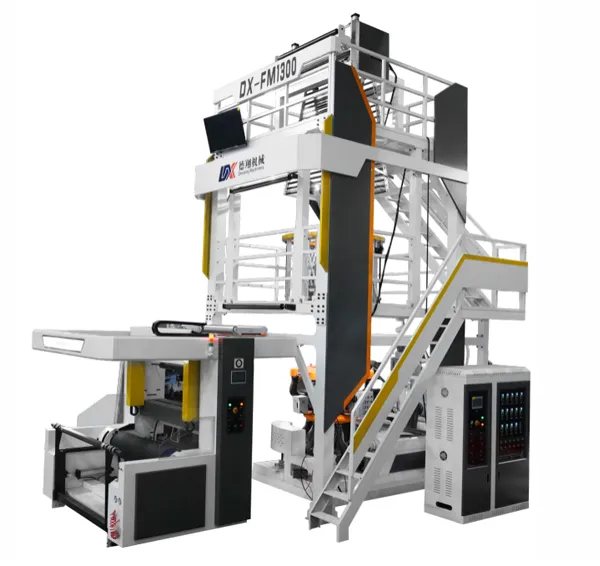
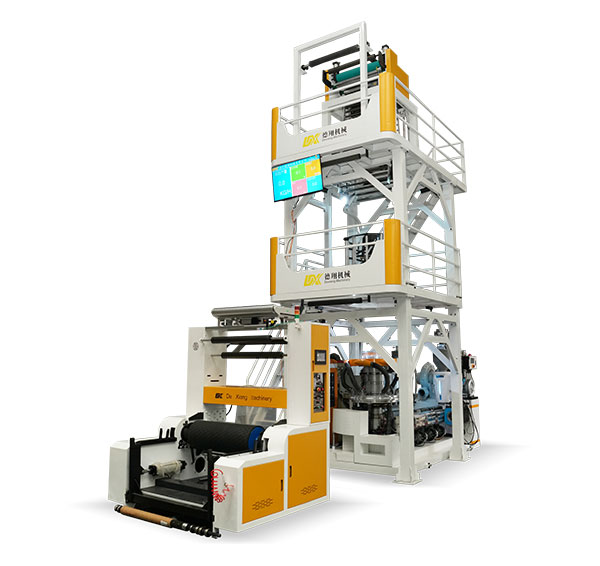
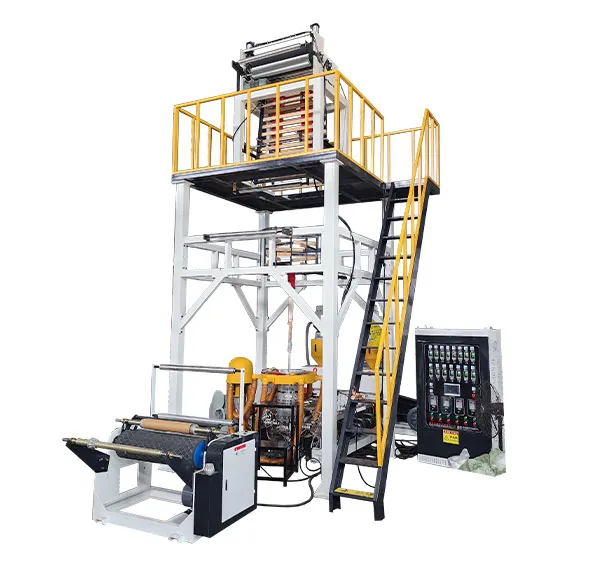
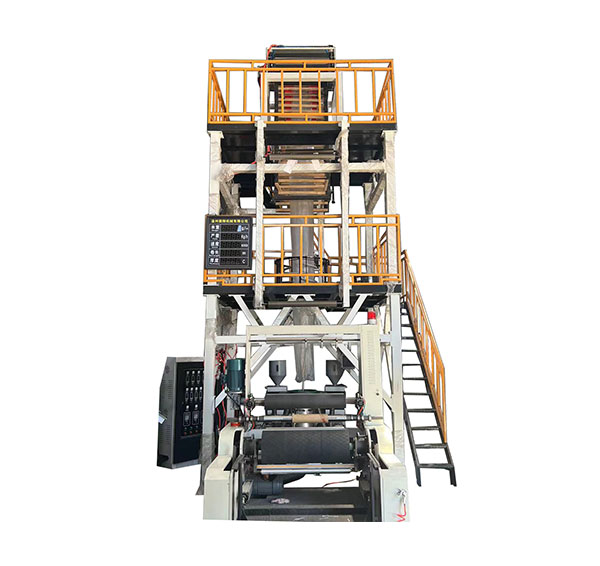
It’s no secret that the flexible packaging sector is being pulled in two directions at once. Brand owners want thinner gauges to hit sustainability targets and reduce resin costs. At the same time, they demand higher barrier performance, better optics, and excellent seal integrity to protect sensitive foods, medical devices, and e-commerce goods. The quiet, capital-intensive response taking over production floors around the world is the shift toward multi-layer blown film technology. Walk through any modern converting facility, and you are increasingly likely to see 5-layer, 7-layer, or even 9-layer lines running alongside—or replacing—traditional monolayer setups.
This isn’t just a machinery refresh cycle. It’s a structural response to the performance limits of conventional film structures. When a single resin can’t simultaneously deliver oxygen barrier, moisture barrier, stiffness, and heat sealability, the logical answer is to partition those functions into separate layers, each only microns thick. And that’s precisely what multi-layer co-extrusion lines are engineered to do.
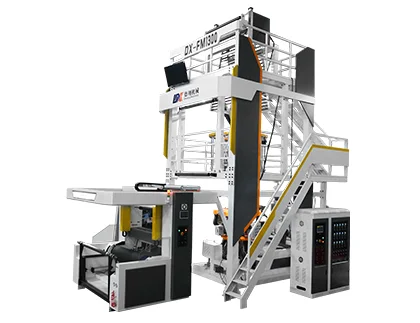
A Quiet Shift Fueled by Real Material Economics
For years, multi-layer blown film extrusion was seen as the domain of large multinational converters with deep pockets. That perception is changing fast. According to the AMI Flexible Packaging Market Report (2024), the installed base of 5-layer and above lines in Asia-Pacific alone grew by over 18% between 2020 and 2024. A mid-size flexible packaging converter in Southeast Asia, speaking at a regional packaging summit, noted that switching from a monolayer-plus-lamination workflow to a single-step 5-layer co-extrusion line reduced their raw material cost by roughly 12% per square meter—while actually improving the oxygen transmission rate (OTR) by 30%.
What’s behind these numbers? The ability to layer a thin EVOH or PA core between polyolefin skins eliminates a downstream lamination step entirely. This not only saves on solvent-based adhesives and secondary processing but also opens the door to fully recyclable all-polyethylene (PE) structures. With the EU Packaging and Packaging Waste Regulation pushing hard for design-for-recycling by 2030, the economic and regulatory winds are aligning behind multi-layer line investments.
What’s Really Different Inside These Lines? A Look at Key Engineering Breakthroughs
The core of a modern co-extrusion line is far more than “a bigger die with more channels.” Three specific advancements are redefining what these lines can deliver day in, day out.
Die head architecture has moved from simple multi-manifold designs to spiral mandrel stacks with computational fluid dynamics (CFD)-optimized flow paths. This matters enormously for film gauge uniformity. A well-designed multi-layer die can hold a ±4% thickness variation across the full web width, even with resins of dramatically different melt flow indices. Some premium dies now incorporate interchangeable insert modules. These allow processors to rearrange layer sequences—say, moving the nylon barrier from the core to the sub-skin—without a complete die rebuild. For converters handling short to medium batch sizes, this reconfigurability dramatically shrinks changeover timelines.
Internal bubble cooling (IBC) systems have evolved alongside die technology. Ultra-precise IBC control, often paired with segmented air rings that respond to real-time gauge scanning data, enables the high throughputs that multilayer structures demand. In practice, a 7-layer line with advanced IBC can sustain a 1,400 kg/hr output rate running a 40-micron film, where a decade-old 3-layer system might be capped at 800 kg/hr for the same structure. The downstream effect is dramatic: a single modern line can sometimes replace two older ones, compressing factory footprint while boosting capacity.
Digital thickness profiling and automatic bubble positioning represent the third critical advancement. Capacitance-based or near-infrared gauge sensors feeding data to servo-driven die bolts adjust melt distribution on the fly. For converters running thin-gauge barrier films—12 micron EVOH-containing laminations, for example—the difference between manual screw adjustment and closed-loop auto-profiling is measured in hundreds of kilograms of scrap per week. One processor we spoke with estimated that retrofitting auto-profiling to their existing 5-layer line paid back the investment in under nine months purely through reduced edge trim and fewer roll rejections.
Selecting the Right Line: Parameters Worth Your Undivided Attention
Given the capital involved, asking “Which line should I buy?” is probably the wrong first question. It’s more productive to start with “What spread of structures do I need to run in the next five years?” The two approaches produce very different machinery selections.
-
Layer flexibility vs. fixed configuration. A 5-layer line with a fixed ABCBA arrangement may be perfect for commodity PE/nylon/EVOH structures. But if there’s a realistic chance you’ll need to peel off a nylon barrier and embed it closer to the surface for better thermoforming performance, a 7-layer line with a modular die becomes significantly more attractive. It’s important to assess not just the number of layers but the ease of rearranging those layers.
-
Extruder sizing and screw design. It’s common to see extruders on every layer sized equally on paper. In practice, the outer skins often need higher output than the tie or barrier layers. Mismatched extruder sizes can constrain the formulations you can run and create residence-time problems with heat-sensitive materials like EVOH. Look for configurations that allow asymmetric extruder sizing and have quick-change barrel section access for screw inspection.
-
Oscillating haul-off and winding integration. Almost every multi-layer blown film line now includes some form of oscillating haul-off to randomize gauge bands. The real differentiator is the integration between the oscillation pattern and the surface or center winder. Poor synchronization at this interface creates hard bands on the finished roll that cause telescoping in transit. Discussing specific winding pattern mappings with suppliers based on your roll diameter and film modulus is time well spent.
-
Operational data readiness. Modern lines generate enormous streams of process data—melt temperatures per extruder, pressure profiles, bubble diameters, frost line height measurement. The question is whether that data remains siloed on the operator panel or feeds into an MES/ERP system for batch traceability. For converters supplying global food or pharma brands, full process traceability is shifting from a “nice to have” to a customer audit requirement. Checking a line’s OPC UA or MQTT compatibility early avoids costly retrofits later.
As you navigate these parameters, having access to transparent, detailed configuration options can fast-track the evaluation stage. For those seeking a deeper dive into specific line layouts and technical specifications that address these exact concerns, it makes sense to explore the modular extrusion systems available that offer asymmetric extruder arrangements and traceability-ready controls.
Operation and Maintenance Pitfalls That Undermine ROI
Even the most advanced capital equipment is only as good as its day-to-day operation. From our observations across dozens of installations, a few operational patterns consistently trip up teams transitioning from monolayer to multi-layer lines.
Purging discipline is one of them. Multi-layer die paths hold significantly more polymer volume. A “quick” purge that works on a monolayer die can leave carbide deposits in narrow manifold channels. One extrusion manager described the consequences bluntly: “We learned the hard way that a 45-minute purge schedule using dedicated purging compound was non-negotiable. Trying to push through with virgin PE saved us 30 minutes one day and cost us a two-day downtime to strip and clean a layered die the next.” Adopting a written purging SOP based on the specific resin family and die complexity is essential—and ideally validated by the equipment supplier.
Temperature profiling for barrier layers warrants special attention. EVOH, PVDC, and even high-barrier polyamides have surprisingly narrow processing windows. Temperature overshoots above 230°C can initiate rapid EVOH degradation, generating gels that break the film bubble or cause weak points in the final structure. Installations that rely solely on extruder barrel set-point control without active melt temperature feedback at the adapter and die entry points are especially vulnerable. Dual-element temperature sensing—comparing set-point, actual barrel temperature, and in-melt temperature—should now be a standard operating protocol, not an option.
Frost line height (FLH) consistency on multi-layer lines is another place where theory collides with reality. The optimal FLH depends on total output rate, bubble diameter, and the layer structure being run. Changing one factor without checking the impact on FLH leads to film with inconsistent orientation, which translates almost immediately into converting problems—particularly in printing or laminating. Many high-quality systems now include automated FLH measurement using laser profiling, feeding into the IBC control loop to lock in the value across shift changes. For operators still using manual FLH observation, regular calibration training becomes a surprisingly high-leverage investment.
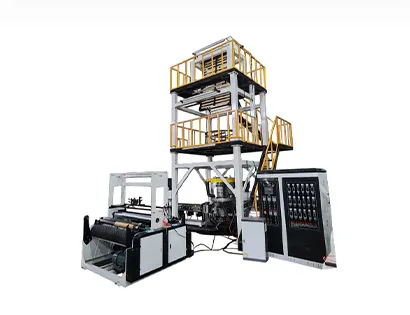
Where the Technology Is Heading
The trajectory points clearly toward greater material efficiency and deeper digital integration. Several shifts are already visible on the horizon.
MDO (Machine Direction Orientation) integration directly after the blown film tower is gaining momentum. By orienting the freshly extruded multi-layer film in the machine direction, converters can achieve stiffness, optics, and down-gauging potential that were previously the exclusive domain of biaxially oriented films—but with the simplicity of an in-line process. Early adopters are running 7-layer PE structures MDO-stretched to below 20 microns that rival OPP in clarity and tensile strength. Expect this to accelerate as demand for mono-material recyclable laminates grows.
Layer multiplication technology—inserting multipliers in the die feed channel to create dozens or even hundreds of micro-layers from a baseline 3 or 5 layer structure—is slowly moving from lab to production. While current applications in flexible packaging remain niche, the potential for ultra-high-barrier films with vastly reduced EVOH content is being actively explored. This is a space worth watching, especially for converters in the pharmaceutical and high-performance food sectors.
AI-assisted process tuning is another promising development. Instead of an operator manually adjusting extruder temperatures and blower speeds recipe by recipe, machine learning models can now ingest historical run data and current quality metrics to propose parameter sets for new film structures. One large packaging group disclosed at a technical conference that trialing an AI-assisted setup assistant reduced time-to-stable-production on new SKUs by over 40%. These tools don't yet replace experienced operators, but they dangerously shorten the learning curve for junior staff.
Stepping Forward with the Right Partner
Choosing a multi-layer blown film line isn’t merely a procurement event. It’s a multi-year partnership that involves commissioning support, process optimization, operator training, and the ability to reconfigure as market demands shift. If you’re evaluating your next investment, it helps to look beyond the spec sheet and into the supplier’s track record in in-situ line upgrades and after-installation technical responsiveness.
For organizations looking at a practical, configurable path into multi-layer film production, Dexiang has developed a range of solutions that prioritize modularity and operational transparency. Their platform allows converters to start with a layer configuration that matches their current book of business while preserving the ability to add extruders, integrate auto-profiling, or adapt the die for new structures down the road. To understand how this approach could apply to your specific production environment, feel free to get a closer look at Dexiang’s production line configurations.
Adopting multi-layer blown film technology is a way to protect margins, meet tightening sustainability regulations, and capture high-value applications that single-layer films simply can’t touch. The tools and knowledge are available. The real question is whether your next line will be designed for flexibility—or just for today’s order book.