English
 Español
A film converter looks at the raw material bill at the end of the month. The number is daunting. LDPE and LLDPE prices fluctuate, and every kilogram of virgin resin cuts directly into margin. An ABA Blown Film Machine takes a different approach. Instead of using 100% virgin material throughout the film, it creates a three‑layer structure: a core B layer filled with low‑cost calcium carbonate (up to 40‑60%) or recycled material, sandwiched between two A layers of virgin resin that provide strength, gloss, and printability. The result is a film that prints like a premium product but costs significantly less to produce. This guide explains how the ABA structure works, where the savings come from, and how to choose the right ABA machine for your application.
How the “sandwich layer” structure saves money
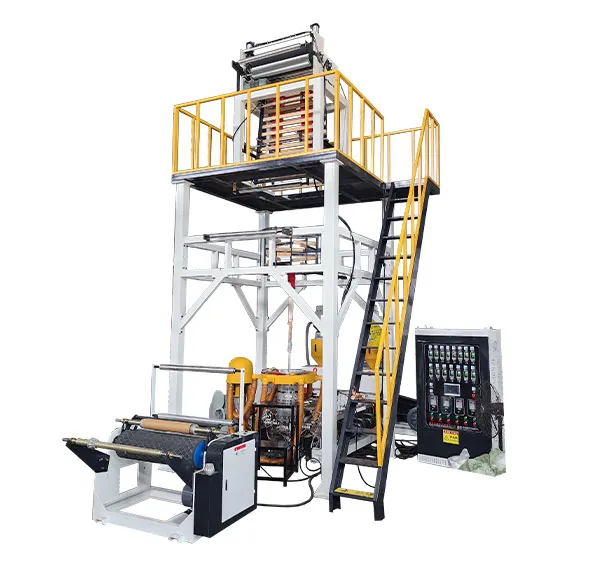
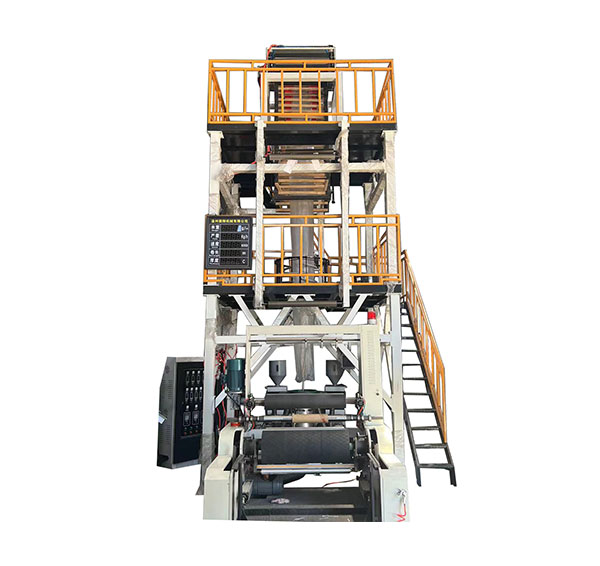
The ABA co‑extrusion principle is simple yet highly effective. Two extruders feed the same A‑layer resin to the outer and inner surfaces, while a third extruder feeds the B‑layer material through the middle channel of a three‑layer die head. The double screw configuration synchronously feeds the two A‑layer extruders, forming the complete ABA structure.
Where the savings come from. The B layer can add 40‑60% calcium carbonate and recycled materials. The cost of these fillers is typically only 50% that of virgin resin. By shifting 50‑70% of the film‘s thickness to the B layer (depending on the layer ratio), manufacturers can cut raw material costs by roughly 40‑50% compared to a monolayer film of the same thickness.
Twin‑screw efficiency. The double screws supply materials synchronously, and the production capacity is 40% higher than that of a single‑screw machine of the same specification. More output per hour from the same equipment footprint reduces labor and overhead costs per kilogram of film produced.
Strength and printability: what the A layers do
The cost savings would be meaningless if the film performed poorly. The ABA structure is engineered to maintain or even improve physical properties. The finished film‘s strength is close to that of pure new materials, with a 30% increase in transverse tensile force. The double‑sided A layer wraps the B layer, and the film surface gloss and puncture resistance are superior to those of a single‑layer machine, making it suitable for printing such as clear supermarket bag logos. This means a converter can produce a bag that prints sharply, resists tearing, and costs significantly less than a monolayer bag of the same thickness. For high‑volume applications like vest bags and roll bags, the ABA structure is a proven value driver.
Applications that benefit most from ABA
Supermarket bags. Vest bags and roll bags with a thickness of 0.02‑0.05mm are the most common ABA applications. The film needs good printability for store logos and sufficient strength to carry products without tearing, which the ABA structure delivers cost‑effectively.
Heavy packaging. Fertilizer bags and feed bags benefit from adding filler to the B layer to enhance stiffness. The lower cost per bag matters even more in high‑volume agricultural and industrial applications.
Agricultural films. Greenhouse films and biodegradable agricultural films are produced on ABA lines, where the core layer can incorporate recycled material without affecting the outer layers‘ UV resistance and mechanical properties.
General packaging. Food packaging film, medical packaging film, and daily chemical product packaging film are all common ABA outputs, with the A layers made from FDA‑compliant virgin resin while the B layer reduces overall material cost.
Differentiated screw designs for different filler loads
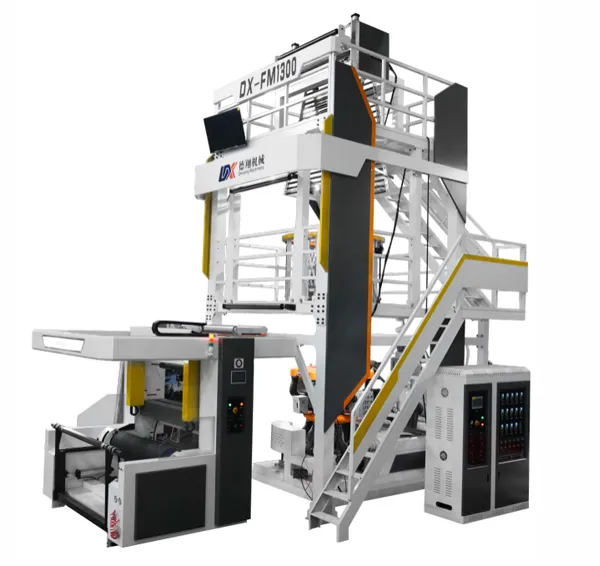
Not all ABA machines handle filler the same way. The B‑layer screw must be designed to transport calcium carbonate and recycled materials without degrading or causing delamination. DEXIANG offers differentiated screw designs: the A‑layer screw is mainly for plasticization, and the B‑layer screw is for transporting the filler, with the die head flow channel optimized to avoid material delamination. For high‑barrier or functional film applications, more advanced machines in the DEXIANG ABA series are built for demanding uses. For standard shopping bags and agricultural films, a basic differentiated screw is sufficient. For high‑filler applications (50‑60% calcium carbonate), a screw with a specially designed compression section and deeper flights ensures consistent feeding and melt homogeneity.
How to choose the right ABA blown film machine for your needs
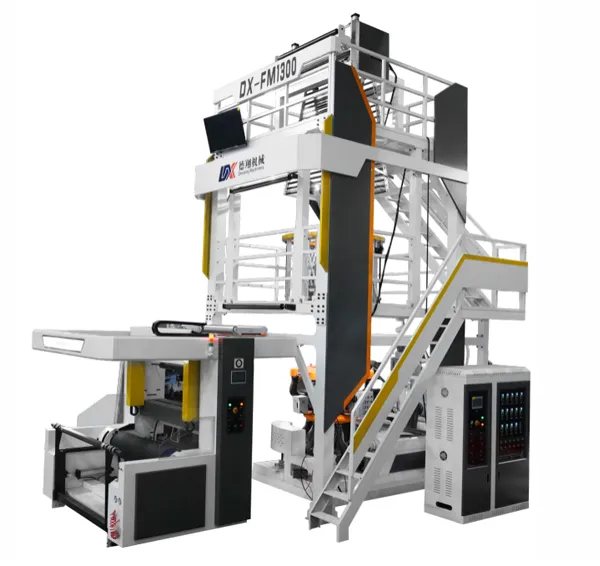
Step 1: Match output to production demand. DX‑900ABA (DX‑900 series) produces 120‑130 kg/h at 200‑800 mm film width. DX‑1300ABA (DX‑1300 series) produces 130‑180 kg/h at 500‑1200 mm film width. DX‑1600ABA (DX‑1600 series) produces 180‑200 kg/h at 800‑1500 mm width. For high‑speed applications, the ABA High Speed Film Blowing Machine reaches 180‑220 kg/h at 600‑1200 mm width.
Step 2: Match screw design to material mix. For standard shopping bags (virgin LDPE with low filler), the standard double‑screw configuration is sufficient. For fertilizer bags or heavily filled films (30‑60% CaCO₃), specify a differentiated screw design where the B screw is optimized for filler transport.
Step 3: Consider optional equipment. A gram weight system monitors gram weight deviation in real time, helping maintain consistent layer ratios and reducing material waste. A double winder allows continuous operation with roll changes without stopping the line. A fast screen changer reduces downtime for screen pack changes.
Step 4: Consider energy consumption. DEXIANG machines are designed with energy savings of 10‑30% compared to conventional lines, achieved through optimized barrel heating, efficient air ring design, and high‑efficiency main motors.
Troubleshooting: When ABA film quality drops
Film surface is dull or has poor printability. The A layers may be too thin, allowing filler to migrate to the surface. Increase the A‑layer extruder speed or adjust the layer ratio. Check the die head temperature—if the B‑layer material is overheating, degradation products can contaminate the A layers.
Film strength is lower than expected. The B‑layer filler content may be too high (above 60%). Reduce the filler percentage or switch to a finer particle size calcium carbonate. Also check the transverse tensile force specification; DEXIANG machines achieve a 30% increase in transverse tensile force when properly configured.
Layer delamination during printing or bag making. The die head flow channel may not be optimized for your material combination. On DEXIANG differentiated screw designs, the die head flow channel is specifically optimized to avoid material delamination, but this requires correct material pairing. Ensure the A‑layer resin is compatible with the B‑layer filler and that melt temperatures are matched.
Questions from production managers
Q: Can I use the same ABA machine for both thin shopping bags (0.02mm) and thick agricultural film (0.10mm)?
A: Yes, with the appropriate die and screw settings. DEXIANG machines support film thickness from 0.008mm to 0.10mm. However, changing between extreme thickness ranges may require adjusting the die gap, air ring settings, and take‑up speed. For frequent changeovers, consider a machine with a quick‑change die system.
Q: What is the typical payback period for an ABA machine versus a monolayer machine?
A: The material cost reduction of 40‑50% on raw materials typically pays back the additional equipment cost within 12‑18 months for high‑volume bag producers. The 40% higher output compared to single‑screw machines further shortens the payback period.
Q: How often should I replace the B‑layer screw when running 50% calcium carbonate?
A: For highly filled compounds, inspect the B‑layer screw every 2,000 operating hours for wear. Use a screw with a wear‑resistant coating or bimetallic barrel to extend service life. DEXIANG screws are made from alloy material for extended durability.
Q: Does the ABA structure affect recyclability?
A: The entire structure uses the same polyolefin base, making the film recyclable as PE or PP. The calcium carbonate filler becomes ash during recycling and does not contaminate the stream. However, some recyclers may penalize high‑ash content; check with your local recycler for acceptable filler percentages.
DEXIANG ABA series: engineered for cost‑effective production
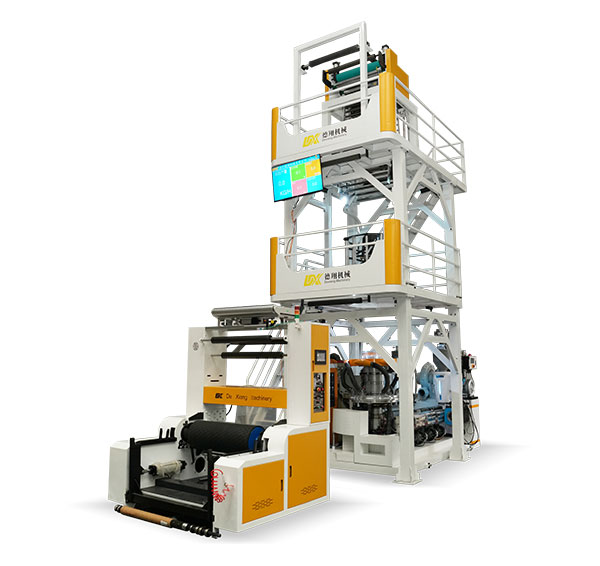
When the goal is to cut material costs without cutting corners on quality, the engineering behind the ABA line determines how much filler the film can carry and how consistent the output remains. DEXIANG Machinery manufactures a full range of ABA Blown Film Machine series, from entry‑level models to high‑speed lines. The ABA High Speed Film Blowing Machine (DX60-60-1300) produces 180‑220 kg/h at 600‑1200 mm width, with an optional gram weight system for real‑time deviation monitoring and a double winder for continuous operation. The DX‑1600ABA produces 180‑200 kg/h at 800‑1500 mm width, with alloy screws, dual‑lip air ring, and a 1200‑1500mm maximum winding diameter. DEXIANG machines handle HDPE, LDPE, and LLDPE across applications from supermarket vest bags to agricultural films and heavy‑duty sacks. All machines feature twin‑screw synchronous feeding for 40% higher output than single‑screw lines. DEXIANG provides installation, commissioning, and training services, helping operators achieve consistent layer ratio control and film quality from the first production run.
→ Request a quote from DEXIANG for an ABA Blown Film Machine matched to your material cost targets — Share your target film width, thickness range, output requirement (kg/h), and intended filler percentage (30‑60% CaCO₃). Their technical team will recommend the right model and screw configuration to maximize your material savings.